



Editorial Integrity
Making informed real estate decisions starts with having the right knowledge. At HomeAbroad, we offer US mortgage products for foreign nationals & investors and have a network of 500+ expert HomeAbroad real estate agents to provide the expertise you need. Our content is written by licensed mortgage experts and seasoned real estate agents who share insights from their experience, helping thousands like you. Our strict editorial process ensures you receive reliable and accurate information.
Key Takeaways

1. Paying cash may simplify closing, but financing often creates a stronger long-term strategy for foreign national rental investors by preserving liquidity and flexibility.

2. HomeAbroad's DSCR loans qualify primarily on the property’s rental income, allowing many investors to buy US real estate without US credit history or US income documentation.

3. Using leverage can help foreign investors keep capital available for reserves, repairs, vacancies, currency flexibility, and future property acquisitions instead of tying everything into one asset.

4. Financing first is often simpler than buying in cash and refinancing later, since future refinancing still depends on appraisal value, DSCR performance, reserves, and market conditions.
Table of Contents
Financing vs Cash: Which Works Better for Foreign Investors Buying US Real Estate?
Many foreign investors begin with one assumption: paying cash will make buying US real estate easier and safer. In many cases, that assumption comes from uncertainty around financing. International buyers often assume they will not qualify for a US mortgage without US credit history, a Social Security Number, or US income documentation, so they default to paying all cash instead.
According to National Association of Realtors (NAR) International Transaction data, 47% of foreign buyers purchasing US real estate paid all cash. But at HomeAbroad, one pattern we see repeatedly is foreign investors tying too much capital into a single property and later wishing they had preserved more liquidity for repairs, vacancies, property taxes, currency flexibility, or future investments.
That is exactly where HomeAbroad’s DSCR (Debt Service Coverage Ratio) financing changes the conversation. Instead of qualifying primarily on US income or US credit history, eligible foreign national investors can qualify based largely on the rental income generated by the property itself.
For many rental investors, financing is not about whether they can afford the property. It is about whether using 100% cash is the most efficient long-term investment strategy.
This guide breaks down when paying cash still makes sense, when DSCR financing creates a stronger long-term position, and what foreign investors should review before deciding between the two approaches.
One thing that surprises many foreign investors is how quickly liquidity disappears after an all-cash purchase. The transaction closes smoothly, but a few months later they are covering repairs, furnishing costs, vacancies, or another investment opportunity with far less flexibility than they expected.

Financing vs Cash: Quick Comparison
Factor | Paying Cash | Financing With a HomeAbroad DSCR Loan |
|---|---|---|
Upfront capital required | 100% of purchase price paid upfront | Typically 20%–30% down payment depending on the program |
Liquidity after closing | Most capital remains tied to one property |
|
Ability to scale portfolio | Slower portfolio growth because capital is concentrated in one asset | Easier to acquire multiple properties over time using leverage |
US credit history required | No | Many DSCR programs do not require US credit history |
Qualification method | No lender qualification required | Property typically qualifies based on rental income and DSCR |
Monthly mortgage payment | None | Monthly PITIA payment required |
Access to long-term fixed financing | Not applicable | 30-year fixed-rate options may be available |
Currency risk | Large lump-sum currency conversion at one exchange rate |
|
Estate tax net equity exposure | Higher net equity may increase US estate-tax exposure for foreign nationals holding property personally | Financing can reduce net equity exposure because leverage lowers the investor’s equity position in the property |
Refinance flexibility later | Future refinance depends on valuation, seasoning, and market conditions |
|
Closing speed | Often faster because no lender approval is required | Slightly longer because underwriting and appraisal are involved |
Why Investors Like Cash Purchases
Paying cash can simplify a US real estate purchase. There is no lender underwriting process, financing contingency, or monthly mortgage obligation after closing, which is why some foreign investors still prefer it for speed or simplicity.
The bigger question is what happens after the transaction closes.
At HomeAbroad, one pattern we see repeatedly is foreign investors using most of their available liquidity on the purchase itself and later realizing they still needed capital for repairs, furnishing, vacancies, insurance increases, taxes, or future investment opportunities. Many eventually revisit financing after discovering how restrictive an all-cash purchase can become once operating expenses start building.

Lucas Hernandez
Mortgage Loan Originator
HomeAbroad
NMLS #2171747“We regularly speak with investors who paid cash for their first US property and later wished they had preserved more liquidity. The closing felt simpler upfront, but a few unexpected expenses or a long vacancy changed how they viewed leverage very quickly.”
Why Financing Often Works Better for Rental Investors
For rental property investors, financing is not just a way to afford the purchase. It is a way to manage capital.
A buyer who pays all cash may own one property outright. A buyer who finances may be able to keep more cash available, maintain stronger reserves, and stay positioned for additional acquisitions. That difference can shape the investor’s entire US real estate strategy.
HomeAbroad is built for foreign nationals who want to buy US real estate with a financing structure that understands international buyers. Through HomeAbroad, eligible investors can access mortgage options, real estate support, and guidance designed for cross-border purchases.
1. Financing Can Help Investors Scale Beyond One Property
For many foreign national investors, the biggest advantage of financing is not simply preserving cash. It is the ability to build a larger rental portfolio over time instead of concentrating all available capital into one property.
For example, an investor with $500,000 available could purchase a single $500,000 property entirely in cash. Another investor could use that same capital differently: putting 25% down on a $500,000 rental property, preserving additional liquidity, and remaining positioned for future acquisitions, reserves, or renovations.
That does not mean every investor should scale aggressively. But financing gives foreign buyers more flexibility to grow strategically instead of exhausting liquidity on a single transaction.
2. Preserving Liquidity Matters More Than Many Foreign Buyers Expect
For foreign nationals managing US rental property from another country, maintaining cash reserves is not a luxury. It is part of owning the property responsibly.
A pattern HomeAbroad sees repeatedly is investors focusing heavily on the purchase itself while underestimating post-closing operating costs. On a $400,000 rental property in Florida, annual carrying costs can easily reach $15,000–$20,000 between property taxes, insurance, property management, maintenance, and vacancy reserves.
That pressure becomes much harder to manage when most available capital was already used for the purchase.
3. DSCR Loans Qualify the Property Based on Rental Income
One reason many foreign investors choose DSCR financing is that qualification is centered primarily on the property’s rental income instead of the borrower’s US employment profile.
HomeAbroad’s DSCR underwriting starts with one core question: can the property support itself as a rental investment? If the projected rental income covers the payment, taxes, insurance, and HOA dues, the property may qualify even if the investor does not have US credit history, a W-2, or a Social Security Number.
For example, a $400,000 property with a $300,000 loan might have a monthly PITIA payment of approximately $2,400. If the appraiser’s market-rent analysis supports $3,000 per month in rental income, the DSCR would be 1.25, which is generally considered a strong ratio. If projected rent is only $2,200, the DSCR falls below 1.0 and the deal becomes more difficult to qualify.
One important detail many investors miss is that lenders typically rely on the appraiser’s market-rent analysis rather than Zillow estimates or informal projections.

Dorian Adams-Walker
Mortgage Loan Originator, HomeAbroad
One situation we see often is investors underwriting deals using online rent estimates that come in much higher than the appraiser’s final market-rent analysis. That difference can change the DSCR calculation enough to affect loan eligibility or required down payment.
4. Why 30-Year Fixed-Rate Financing Matters for Foreign Investors
Many international buyers come from markets where shorter-term mortgages, variable-rate structures, or balloon-payment loans are more common than long-term fixed financing.
A 30-year fixed-rate structure gives foreign investors something especially valuable when managing US property remotely: predictable long-term payment planning. The principal and interest payment remains stable even if interest-rate markets change later.
That predictability matters more for foreign investors because managing unexpected payment increases from another country is significantly more difficult than it is for local owner-operators.
5. Financing May Improve the Tax Structure of a Rental Investment
Financing can also affect the tax structure of a US rental property investment.
Mortgage interest, property taxes, operating expenses, and depreciation may reduce taxable rental income depending on how the property is owned and how the investor elects to report US rental income. Residential rental property is generally depreciated over 27.5 years under current IRS rules, which can create meaningful deductions over time.
Foreign investors may also review a Section 871(d) election with a qualified US tax professional. In some situations, that election allows rental income to be treated as effectively connected income, potentially making deductions such as mortgage interest, depreciation, and operating expenses available.
Tax treatment depends heavily on ownership structure, country of residence, and applicable tax treaties, which is why foreign investors should always review these decisions with a qualified US tax advisor before purchasing property.
How HomeAbroad DSCR Financing Works
HomeAbroad’s DSCR loan program is designed for income-producing investment properties.
The lender reviews the rental income, PITIA payment, borrower reserves, down payment, property type, and overall loan structure. The goal is to determine whether the rental property can support the debt.
Here is a simplified view of how HomeAbroad DSCR financing works for eligible foreign national investors:
Features | Requirements |
|---|---|
Qualification method | Based primarily on the property’s rental income and DSCR rather than the borrower’s US employment income |
US credit history required | Not require |
Social Security Number (SSN) required | Not required |
Eligible property types | Long-term rentals, short-term rentals, vacation rentals, condos, and single-family investment properties |
Down payment | Often starts around 25% |
Reserve requirements | Typically 6 Months |
Loan structure | Fixed-rate and adjustable-rate options may be available |
Ownership structure | Personal name and LLC ownership structures are commonly allowed |
These are general program features, not a guarantee of approval. Final terms depend on borrower eligibility, property eligibility, appraisal, title, investor guidelines, reserves, documentation, and underwriting review.
Financing vs Cash: Example Scenario
Consider two foreign investors who each have $500,000 available to purchase US rental property.
Scenario 1: Paying Cash
The first investor purchases a Florida rental property for $460,000 in cash and spends approximately $22,000 on closing costs, furnishing, inspections, and setup expenses. After closing, roughly $18,000 remains available as emergency reserves.
During the first year, the property generates approximately $28,800 in gross rental income. Operating costs, including property taxes, insurance, vacancy allowance, maintenance, and property management, total roughly $14,000 for the year.
Midway through year one, the property requires a $6,000 HVAC replacement after an extended vacancy period. The investor covers the expense, but reserves become significantly tighter afterward because most available capital was already concentrated in the purchase itself.
Scenario 2: Financing Through a DSCR Loan
The second investor purchases a similar $460,000 rental property using a DSCR loan.
The investor puts 25% down ($115,000), spends approximately $14,000 on closing costs, and maintains roughly $20,000 in required reserves. Total initial capital deployed is approximately $149,000, leaving more than $350,000 still available after closing.
The financed property carries a monthly PITIA payment of approximately $2,200. The appraiser’s market-rent analysis supports rental income of approximately $2,900 per month, producing a DSCR near 1.32.
During the first year, the property remains cash-flow positive after debt service while the investor still retains significant liquidity for future acquisitions, operating reserves, renovations, or currency flexibility.
By year two, the investor is in a position to evaluate a second acquisition instead of having nearly all available capital tied to a single property.
This does not mean financing is automatically better for every investor. Some buyers still prefer paying cash for simplicity, faster closings, or lower monthly obligations. But for many foreign national rental investors, the bigger question is not whether they can buy the property outright. It is whether concentrating all available capital into one asset creates the strongest long-term investment position.
Real Example: Financing a High-Value Florida Rental Instead of Paying Cash
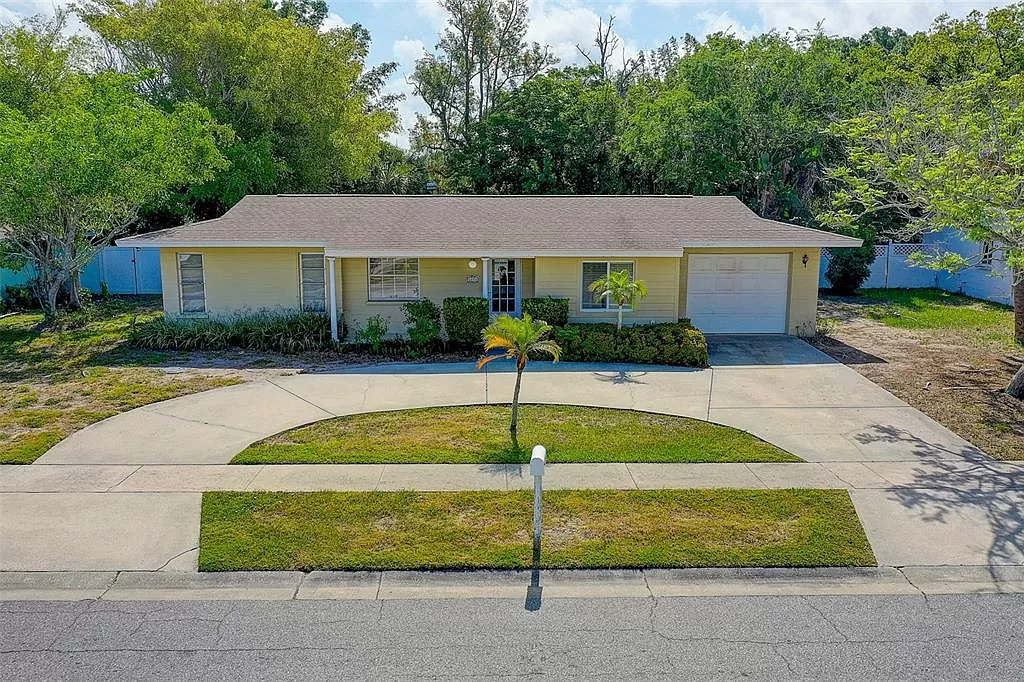
A Canadian investor financing a $2.655M single-family rental in Plantation, Florida, illustrates how DSCR financing can preserve liquidity instead of concentrating all available capital into one property.
Rather than committing the full purchase price in cash, the investor used a HomeAbroad DSCR loan at 70% LTV, putting down approximately $796,500 while preserving roughly $1.86M for reserves, operating flexibility, and future investments. The property qualified based on its $16,000 monthly rental income instead of a conventional US income documentation path.
The loan closed in 25 days, nearly three weeks ahead of the original contract deadline, showing that foreign national financing does not necessarily mean a slower transaction when the file is structured early and documentation is organized properly.
The underwritten DSCR for the property was 1.02, which sat near the qualifying threshold rather than representing a high-cash-flow rental. In this case, the approval strength came from the overall loan structure, borrower reserves, entity setup, and property profile rather than excess monthly cash flow alone.
The same capital-preservation principle applies across price points. Whether a foreign investor is purchasing a $350,000 rental property or a $2.6M property, financing changes how much liquidity remains available after closing for reserves, repairs, vacancies, taxes, insurance increases, and future acquisitions.
Read the full Canadian foreign national DSCR case study here.
When Cash Still Makes Sense
There are still situations where paying cash may be the better option for a foreign investor, particularly when financing limitations outweigh the long-term benefits of leverage.
Scenario | Why Cash May Make Sense |
|---|---|
Auction or time-sensitive purchase | Some auction properties or highly accelerated transactions require immediate proof of funds and cannot wait for lender underwriting timelines |
Distressed or major-rehab property | Properties with significant damage, vacancy issues, or incomplete condition may not qualify for standard DSCR financing until repairs are completed |
Personal-use buyer with no portfolio-growth goals | Buyers purchasing primarily for lifestyle or personal use may prioritize simplicity and lower monthly obligations over leverage or long-term scaling |
Outside these situations, the capital-efficiency, liquidity, and portfolio-growth advantages of DSCR financing often outweigh the simplicity of an all-cash purchase for long-term foreign national rental investors.
The Hidden Cost of Paying Cash
The cost of paying cash is not limited to the money spent at closing. The bigger issue is what the investor can no longer do with that capital afterward.
A foreign investor who uses $500,000 to purchase one US property outright may still have strong equity, but equity is not the same as liquidity. That capital is now tied to a single asset and may not be easily accessible when unexpected expenses or new investment opportunities appear.
At HomeAbroad, one pattern we see repeatedly is foreign investors paying cash for a property and then returning months later looking for a cash-out refinance after a major repair, insurance increase, vacancy period, or second investment opportunity created new liquidity pressure.
The challenge is that accessing equity later is not immediate. A refinance still requires appraisal review, underwriting, DSCR qualification, reserve verification, and closing timelines that can take weeks to complete.
For foreign nationals managing property from another country, liquidity often matters more than expected. Property taxes rise, insurance premiums change, vacancies last longer than projected, and major repairs rarely happen on a convenient schedule.
A financed property with healthy reserves may ultimately be easier to operate than a fully paid-off property with limited liquidity after closing.
Why Financing Fits Long-Term Rental Strategy
One advantage of DSCR financing is that it forces the investor to evaluate the property as an operating rental business before closing instead of relying only on appreciation assumptions or optimistic rent projections.
During the DSCR review process, underwriting evaluates whether the projected rental income realistically supports the payment structure, taxes, insurance, property expenses, reserve requirements, and overall viability of the deal. That process often helps investors identify weak cash-flow assumptions before capital is committed.
A strong DSCR review forces the investor to look at the property as a rental business. If the projected rent, taxes, insurance, and payment structure do not work together, it is better to identify that before closing rather than after the property is already operating.
For many foreign national investors, the goal is not simply buying one US property. It is building a stable long-term rental portfolio that can continue performing through vacancies, insurance increases, market shifts, and operating costs over time.
Financing vs Cash by Investor Goal
Investor Goal | Strategy That Usually Fits Best | Why |
|---|---|---|
Buy one property with no ongoing debt obligation | Paying cash |
|
Build a long-term US rental portfolio | DSCR financing | Preserves liquidity and allows investors to scale across multiple properties over time |
Keep capital available for repairs, vacancies, or future investments | DSCR financing | More post-closing liquidity remains available instead of being concentrated in one property |
Have foreign income but no US employment or US credit history | HomeAbroad DSCR financing | DSCR underwriting qualifies primarily on the property’s rental income rather than US income documentation |
Improve long-term rental-property tax efficiency | DSCR financing | Mortgage interest and depreciation may support rental-income deductions, and some investors review Section 871(d) elections with their US tax advisor |
Purchase a distressed or auction property requiring immediate closing | Paying cash | Some distressed properties may not qualify for standard DSCR financing before repairs are completed |
Prioritize speed and transaction simplicity over leverage | Paying cash | Removes underwriting and lender approval timelines |
Hold property through an LLC structure for investment purposes | DSCR financing | Many foreign national DSCR programs allow LLC ownership structures commonly used by long-term investors |
Preserve flexibility against currency fluctuations | DSCR financing | Only the down payment is typically converted upfront instead of the entire purchase price at one exchange rate |
Why HomeAbroad Financing Is Built for Foreign Investors
Foreign investors often assume that paying cash removes the complexity of buying US real estate. In reality, it removes only one layer: the mortgage approval itself.
The rest of the transaction still remains. Foreign buyers still need to understand title review, source-of-funds documentation, international wire transfers, insurance setup, tax reporting requirements, entity structuring, reserve verification, and remote closing logistics.
That is where foreign national transactions differ from standard domestic purchases.
HomeAbroad’s DSCR financing process is structured specifically around the operational challenges international investors face when buying US rental property. Instead of treating foreign documentation as an exception case, the process is designed for overseas bank statements, foreign-source income, international wire transfers, remote closings, LLC ownership structures, and cross-border reserve verification from the beginning of underwriting.
A major difference foreign investors notice is that many transaction issues are not credit-related. The delays usually come from documentation timing, source-of-funds gaps, currency transfers, reserve movement, or international compliance review.
HomeAbroad helps foreign investors coordinate these moving pieces together instead of separating financing, entity setup, underwriting, and closing into disconnected processes. That includes guidance around DSCR qualification, reserve preparation, LLC structuring, source-of-funds documentation, remote closing coordination, and foreign national underwriting requirements before the property goes under contract.
For many international buyers, the biggest advantage is not simply getting approved for financing. It is working with a team already familiar with the operational realities of cross-border real estate transactions.
Should Foreign Investors Buy in Cash First and Refinance Later?
Some foreign investors purchase US property in cash with the intention of refinancing later after the property is stabilized or producing rental income. In certain situations, that strategy can work.
The risk is assuming refinancing will automatically be available later under the same terms or property value the investor expected at purchase.
A future refinance still depends on underwriting. The lender may review the property’s appraised value, current rental income, DSCR performance, reserve requirements, seasoning timelines, title history, source-of-funds documentation, and overall market conditions at the time of the refinance application.
At HomeAbroad, one pattern we see repeatedly is investors expecting to recover a large portion of their capital through a refinance, only to discover that interest rates increased, the appraisal came in lower than expected, or the property’s rental performance no longer supports the projected loan amount.
That creates a situation where the investor still has most of their capital tied to the property longer than originally planned.
What to Review Before Choosing Financing or Cash
Before deciding between paying cash and using financing, foreign investors should evaluate four practical questions about the property, their liquidity, and their long-term investment strategy.
1. Is this a long-term rental investment or a short-term purchase?
DSCR financing is generally best suited for investors planning to hold US property as a long-term rental asset. Investors focused on portfolio growth, rental income, and long-term appreciation often benefit more from preserving liquidity and using leverage strategically.
If the goal is a fast resale, distressed-property renovation, or auction purchase requiring immediate funding, paying cash may make more sense.
2. How much liquidity will remain after closing?
Many foreign investors focus heavily on the purchase itself without fully calculating what remains afterward for repairs, reserves, insurance increases, vacancies, furnishing, taxes, or future acquisitions.
The important question is not simply whether the investor can buy the property in cash. It is whether using that much capital on one asset leaves enough flexibility after closing.
3. Will the property realistically support financing?
For DSCR financing, the property’s projected rental income must support the debt structure. That means investors should evaluate market rent, taxes, insurance costs, HOA dues, vacancy assumptions, and operating expenses before making an offer.
A strong DSCR review can help investors identify weak rental assumptions before capital is committed to the deal.
4. What ownership structure and long-term plan make the most sense?
Foreign investors should decide early whether the property will be purchased in personal name or through an LLC structure because ownership setup affects financing, liability exposure, tax planning, and future refinancing flexibility.
The ownership structure should ideally be established before the purchase contract is signed rather than changed after closing.
For many foreign national investors, the right financing strategy is less about choosing “cash versus debt” and more about aligning liquidity, rental performance, ownership structure, and long-term investment goals before entering the transaction.
Bottom Line: Financing Is Usually the Better Portfolio Strategy
Paying cash can simplify a US property purchase. But for many foreign national investors focused on long-term rental ownership, financing often creates a stronger overall investment position.
HomeAbroad’s DSCR financing allows eligible foreign investors to preserve liquidity, maintain reserves, scale into multiple properties over time, and qualify primarily based on the rental income of the property rather than US employment income or US credit history.
The goal is not simply buying real estate. It is building a sustainable investment strategy that can continue operating through vacancies, repairs, insurance increases, market shifts, and future acquisition opportunities.
We have helped foreign national investors from more than 40 countries finance US rental property through DSCR and foreign national mortgage programs designed specifically for cross-border buyers.
Get pre-qualified for a DSCR loan with HomeAbroad and review your eligibility, reserve requirements, down-payment options, and rental-property strategy before making an offer on a US investment property.
FAQs
Is financing better than paying cash for foreign investors buying US real estate?
For many foreign national rental investors, financing creates better long-term flexibility because it preserves liquidity, supports portfolio growth, and allows investors to keep reserves available after closing. Paying cash may still make sense for auctions, distressed properties, or buyers prioritizing simplicity over leverage.
Can foreign nationals get US real estate financing without US credit history?
Yes. Many foreign national DSCR programs do not require US credit history. Instead, lenders usually evaluate the property’s rental income, down payment strength, reserves, and overall file stability.
What DSCR ratio do I need to qualify for a foreign national DSCR loan?
Many DSCR programs look for ratios near or above 1.0, meaning the property’s projected rental income generally covers its PITIA payment. Some No-Ratio DSCR programs may also be available depending on the property and borrower profile.
Does paying cash make an offer stronger?
Cash offers can sometimes close faster because there is no lender underwriting process. However, strong pre-approvals, documented reserves, and clean financing terms can still make financed offers highly competitive in many markets.
Can foreign nationals deduct mortgage interest on US rental property?
In many cases, yes. Mortgage interest, depreciation, and certain operating expenses may reduce taxable rental income depending on the ownership structure, tax election, and applicable treaty treatment. Foreign investors should review these rules with a qualified US tax advisor.
Should foreign investors buy in cash first and refinance later?
Some investors use this strategy, but refinancing later is not guaranteed. Future loan approval still depends on the property’s appraised value, rental income, DSCR, reserves, seasoning requirements, and market conditions at the time of refinance.