Buying a rental property in another country involves more than choosing the right house. For international investors, one of the less visible challenges is proving that the money behind the purchase is available, accessible, and acceptable to a US mortgage lender.
Consider the financing questions that come with having money in more than one country. Can funds held outside the US count toward a property purchase? How will the lender verify international bank statements? And what happens when the investor needs to document not only the money for closing, but enough additional liquidity to cover future mortgage payments?
These are particularly relevant questions in this Texas transaction. A foreign national investor was purchasing a single-family rental property using funds documented across US and international bank accounts.
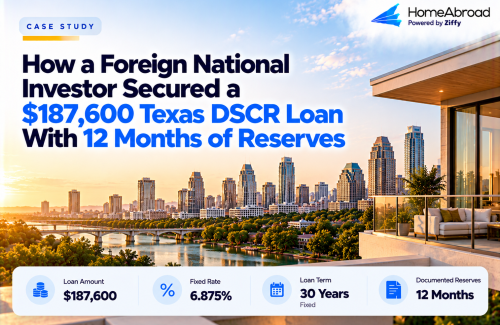
The investor ultimately secured a $187,600 DSCR purchase loan through HomeAbroad. The property appraised at $279,000, and the funded financing carried a 6.875% fixed interest rate for 30 years, with 12 months of documented reserves.
The defining feature of this purchase was how property-based financing and cross-border asset documentation came together to support a completed US real estate investment.
The Texas Purchase at a Glance
Transaction details are taken from the funded case file. The reported LTV is preserved as recorded and is not calculated from the displayed appraised value.
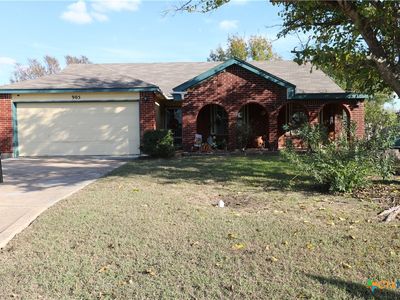
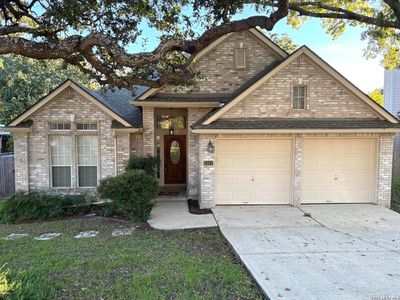
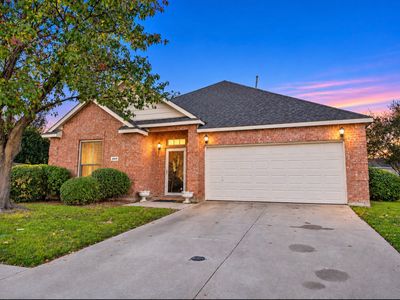
Investment Properties on Sale in Texas Today


A Texas Rental Purchase With an International Financing Question
A single-family rental property in Texas represented a US real estate investment opportunity for this foreign national buyer. The financing would need to support an income-producing property rather than a home the investor intended to occupy personally.
That distinction was important. A conventional owner-occupied mortgage is generally designed around a borrower’s primary residence and personal financial qualifications. An investment-property loan introduces different questions, including the property’s rental income, valuation, proposed debt, and the borrower’s available assets.
For a buyer living outside the US, the financing process can have another layer. Money available for a purchase may not all be sitting in a single US bank account.
In this transaction, the documented assets were spread across both US and international accounts. The purchase therefore required a financing structure that could accommodate a foreign national investor while establishing that the necessary funds and reserves were properly documented.
The Money Was Available. It Still Had to Be Documented.
Having sufficient assets and demonstrating those assets to a mortgage lender are two different things.
A foreign national buyer may have savings, investments, or other eligible funds outside the US. But the lender must still establish whether the funds meet the relevant underwriting requirements, including acceptable documentation, ownership, availability, and any applicable sourcing requirements.
The verified feature of this case was the use of financial documentation from both US and international bank accounts. HomeAbroad’s financing process accommodated that cross-border documentation as part of the funded DSCR purchase.
These are general components of cross-border asset verification, not a claim that every listed step created a separate obstacle in this particular transaction. What the completed case establishes is that the investor documented sufficient qualifying assets, including 12 months of reserves.
Why a DSCR Loan Fit This Texas Rental Purchase
HomeAbroad funded the investment using a Debt Service Coverage Ratio (DSCR) purchase loan.
Unlike a traditional mortgage that relies heavily on the borrower’s personal employment income, a DSCR loan focuses primarily on the income-producing property’s ability to support its housing expenses.
For international real estate investors, this can be useful because income earned outside the US may not fit neatly into the documentation requirements of a conventional domestic mortgage.
PITIA includes principal, interest, property taxes, insurance, and applicable association dues.
A DSCR of 1.00 generally indicates that qualifying rental income equals the monthly housing expense used in underwriting. A ratio above 1.00 indicates greater rental-income coverage, while a ratio below 1.00 indicates that qualifying rent is lower than that expense.
The transaction record identifies this loan as a DSCR purchase, but it does not provide the property’s qualifying monthly rent, PITIA, or calculated DSCR. Those figures have therefore not been estimated or invented.
The important point is that HomeAbroad used a rental-property financing program appropriate for the investor’s purchase, alongside verification of the buyer’s available assets.
The Property Appraised at $279,000
While the asset review established the borrower’s financial position, the appraisal provided an independent assessment of the property securing the loan.
The Texas single-family rental appraised at $279,000. The completed appraisal was above the value estimate initially shown in the transaction file.
For a financed property purchase, valuation matters because the lender uses the property as collateral. Appraisal findings can affect the amount of financing available, although purchase-loan underwriting may also depend on the contract price and applicable valuation rules.
The transaction file also reports a 70% LTV. Because the source does not supply the purchase price or the valuation basis used to establish that reported figure, it would be misleading to calculate an investor down payment from the appraisal alone.
What can be confirmed is the final appraised value, funded loan amount, and reported leverage. Together, they describe a purchase that proceeded with substantial collateral value relative to the financing provided.
Why 12 Months of Documented Reserves Were Important
A rental property does not stop generating expenses when it stops generating rent.
An unexpected vacancy, property repair, or delay in collecting rent can leave an investor responsible for the monthly mortgage and other housing costs without matching rental income for that period.
This is one reason lenders may require investment-property borrowers to document financial reserves. Reserves demonstrate access to additional qualifying assets after accounting for the funds needed to complete the purchase.
The funded file established a full year of documented reserves as part of the borrower’s qualifying asset position.
Mortgage reserves are commonly measured in months of the qualifying monthly housing obligation, often expressed as PITIA. They are not necessarily cash held in a separate account, and their precise composition depends on the program’s eligible-asset requirements.
In this Texas purchase, documenting 12 months of reserves added an important layer to the overall financing profile. The lender was not relying solely on the property’s valuation or anticipated rental income. The investor also demonstrated a documented liquidity position.
Three Elements That Made the Financing Work
The strength of this transaction was not a single unusually favorable number. It was the combination of a suitable mortgage program, documented international assets, and a loan structure that supported the investor’s rental-property purchase.
Property-Based Financing
HomeAbroad used a DSCR purchase program designed around investment-property qualification rather than a conventional owner-occupied mortgage structure.
Cross-Border Assets
The financing incorporated documentation from US and international bank accounts without disclosing the borrower’s private banking details.
Long-Term Financing
The completed purchase received a 30-year fixed-rate loan, alongside documented reserves equal to 12 months.
HomeAbroad’s experience with international buyers is particularly relevant to transactions where eligible financial assets are held abroad. The lender’s review still requires appropriate verification, but foreign bank statements need not automatically place an investor outside the scope of available mortgage programs.
In this case, the outcome confirms that cross-border asset documentation and DSCR financing were successfully combined in a completed Texas purchase.
HomeAbroad Funded the $187,600 Texas DSCR Purchase
The financing was completed, allowing the foreign national investor to purchase the Texas single-family rental with a HomeAbroad DSCR loan.
The final structure paired a $187,600 loan with a 30-year fixed term at 6.875%. The property appraised at $279,000, the transaction file reported 70% LTV, and the borrower documented 12 months of reserves.
The 30-year fixed-rate structure means the loan’s interest rate remains unchanged throughout its scheduled term, although taxes, insurance, and other property costs may change over time.
For the investor, the completed transaction established long-term financing for a US rental property without requiring that all documented assets originate from US bank accounts.
Your Investment Capital Does Not Have to Start in the US
International investors sometimes approach US property financing with a fundamental question: if their savings and investments are held abroad, can they still qualify for a US mortgage?
This transaction offers a practical example of what may be possible. The borrower documented assets in both US and international bank accounts, qualified under a DSCR purchase program, and completed financing for a Texas single-family rental.
The lesson is not that every overseas asset will automatically qualify or that every investor will receive identical terms. Lenders still assess eligible assets, property valuation, rental-income coverage, reserves, and other underwriting requirements.
Rather, the case demonstrates that a foreign national buyer’s financial position can be evaluated through a structure designed for international investment-property purchases.
For a foreign national buying US rental property, financing is not simply about having enough money for the purchase. It is about matching the property, the investor’s financial documentation, and the lender’s underwriting requirements to an appropriate mortgage program.
In this Texas purchase, that alignment resulted in a funded $187,600 mortgage, a 30-year fixed interest rate, and documented reserves supporting the transaction’s overall financial profile.
From International Assets to a Funded Texas Rental Purchase
This investment began with a straightforward objective: financing a US rental property. The less straightforward part was bringing together a foreign national borrower, assets documented across borders, and the requirements of an investment-property mortgage.
HomeAbroad funded the transaction through a DSCR purchase loan with a $187,600 principal balance, a 6.875% fixed interest rate, a 30-year term, and 12 months of documented reserves.
The completed purchase illustrates how international investors can use suitable mortgage structures and properly verified financial assets to pursue US rental-property ownership.
Case Study Disclosure: This case study describes one completed transaction and does not guarantee approval, pricing, loan terms, rental income, property performance, or future results. The investor’s identity and private banking details have been omitted. General explanations of borrower concerns and underwriting considerations provide educational context and should not be interpreted as documented statements or events from the investor. Loan programs, interest rates, fees, amounts, qualification requirements, and terms are subject to change. All financing is subject to underwriting, property eligibility, appraisal findings, documentation, lender requirements, and prevailing market conditions. Equal Housing Opportunity.