
For an international investor, buying a rental property in the US involves more than finding a promising home. The property’s investment potential is only one side of the decision. The other is finding financing that makes sense for someone whose financial life may be based entirely outside the country.
Consider the questions an overseas buyer must answer before committing to a US short-term rental. Will a lender finance an investment property for a foreign national? How much of the property’s value can be financed? And can the investor secure a mortgage with a predictable long-term repayment structure?
These questions provide the backdrop to a completed HomeAbroad transaction in Tomball, Texas, in the Greater Houston area.
A foreign national investor acquired a single-family property intended for short-term-rental use. HomeAbroad funded a $183,750 DSCR purchase loan against a $245,000 appraised value, achieving 75% loan-to-value (LTV) financing with a 7.25% interest rate and a 30-year fixed term.
What makes this transaction worth examining is how the verified property valuation translates into actual financing. Rather than treating a loan approval as an isolated number, this case shows how a foreign national rental purchase was structured around the value of the underlying asset.
The Funded Purchase at a Glance
Investment Properties on Sale in Texas Today



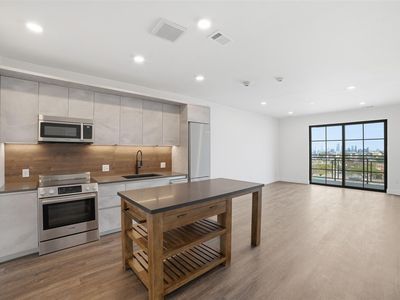

Buying a Houston-Area Rental From Overseas
Tomball is part of the Greater Houston area, giving investors access to a suburban residential market beyond Houston’s urban core. For a short-term-rental buyer, a single-family home in this area represents a different kind of investment decision than a conventional long-term rental.
The property needs to work not only as real estate, but also as a potential furnished accommodation business. Location, operating expenses, guest demand, property management, and local rental rules all deserve attention before the investor commits capital.
In this completed transaction, the confirmed objective was to purchase a single-family rental property in Tomball for short-term-rental use.
The available transaction record does not describe the investor’s previous property holdings, personal motivation, or projected rental returns. What it does establish is that a foreign national buyer successfully obtained acquisition financing for this intended use.
Could the investor secure financing for a US single-family property intended as a short-term rental, while keeping the borrowing amount within a defined percentage of the property’s appraised value?
The Financing Question Behind the Purchase
A foreign national investing in US real estate may have income, assets, and an established financial history abroad, but little or no conventional US credit history.
That can make traditional mortgage qualification less suitable for an investment purchase. A lender may ask for domestic income records or other documentation that does not reflect how an overseas investor earns and manages money.
For rental properties, DSCR financing offers a different approach. Instead of primarily qualifying the borrower through personal income and debt-to-income ratios, a DSCR loan evaluates the property’s qualifying rental income relative to its housing debt obligations.
HomeAbroad offers DSCR loans for foreign national investors, including eligible borrowers without US credit history.
This Tomball purchase used that loan category. However, the case file does not report the investor’s personal credit documentation, the property’s qualifying rental income, or the final DSCR calculation. Those details should not be assumed from the loan program alone.
How HomeAbroad Structured the $183,750 Loan
The financing was built around three confirmed elements: the property’s appraised value, the loan-to-value ratio, and the final mortgage terms.
HomeAbroad funded a $183,750 DSCR purchase loan against the property’s $245,000 appraised value. The result was 75% LTV financing.
The loan carried a 7.25% interest rate with a 30-year fixed repayment term. A fixed-rate structure establishes the contractual interest rate for the term, although property taxes, insurance, and other ownership expenses may change.
| Financing Detail | Final Funded Terms |
|---|---|
| Loan Program | DSCR Purchase |
| Borrower Profile | Foreign National |
| Loan Amount | $183,750 |
| Appraised Value | $245,000 |
| Loan-to-Value | 75% |
| Interest Rate | 7.25% |
| Loan Term | 30-Year Fixed |
| Intended Property Use | Short-Term Rental |
This combination allowed the investor to complete the property purchase using long-term mortgage financing rather than funding the entire acquisition through an all-cash transaction.
How the $245,000 Valuation Supported 75% LTV
The appraisal is one of the most important numbers in this case. It established the property’s reported value, which can be compared directly with the amount HomeAbroad funded.
At 75% LTV, every $100 of appraised property value corresponded to $75 in mortgage financing.
The difference between the appraised value and the funded loan amount was $61,250. This represents 25% of the reported property valuation.
It is important not to confuse that figure with the investor’s documented down payment. The case file does not provide the purchase price, closing costs, or total cash-to-close amount, so those amounts cannot be independently established.
What the transaction confirms is that HomeAbroad funded a mortgage equal to exactly 75% of the property’s appraised value.
Why the Short-Term-Rental Strategy Needed Separate Attention
A single-family property intended for short-term-rental use presents different investment considerations from a home leased to one tenant for a year.
Revenue may depend on nightly rates, occupancy, seasonality, and the cost of operating a furnished property. Those variables can affect whether an investment makes financial sense even after financing has been secured.
For an international investor, the analysis may also need to account for remote property management, cleaning coordination, maintenance, insurance, and applicable short-term-rental restrictions.
Review potential occupancy and nightly pricing, using supported market data instead of assuming full occupancy.
Account for cleaning, furnishing, management, utilities, repairs, taxes, and insurance.
Confirm how a lender assesses qualifying rental income for the proposed property and rental strategy.
This is where investment analysis tools can complement mortgage planning. Investors researching potential acquisitions can explore Ziffy’s AI-native real estate investing platform for property research and investment analysis.
For a short-term-rental strategy, Ziffy’s real estate investing resources can also help buyers understand the factors that influence rental-property performance.
These tools are useful during investment planning, but the Tomball transaction record does not establish that the buyer used Ziffy during this particular acquisition.
A funded DSCR loan confirms a completed financing transaction. It does not, by itself, establish that a property has achieved a particular occupancy rate, generated positive cash flow, or delivered a stated investment return.
The Funded Result: A 30-Year Mortgage for a Texas Rental Purchase
The transaction reached its defining milestone when HomeAbroad funded the $183,750 DSCR purchase loan.
The financing was secured against a single-family rental property in Tomball, with an appraised value of $245,000. The 75% LTV structure established the amount of debt relative to the property’s valuation, while the 30-year fixed term gave the loan a defined long-term interest-rate structure.
For the investor, the confirmed achievement was the completed financing of a US rental-property acquisition through a foreign national DSCR loan.
The record does not report the property’s subsequent rental performance, so the success of this case should be measured by the completed purchase financing rather than by an assumed investment return.
What International Investors Can Learn From This Purchase
The Tomball transaction illustrates how a foreign national can finance an eligible US investment property through a DSCR purchase loan. It also highlights several considerations for investors evaluating similar opportunities.
Understanding the loan-to-value limit helps buyers estimate how much acquisition financing may be available before committing to a property.
In this case, the $183,750 mortgage represented exactly 75% of the $245,000 appraised value. The final appraisal was therefore central to understanding the funded loan structure.
A DSCR approval follows a lender’s qualifying-income requirements. Investors must separately assess operating expenses, occupancy risk, and the potential return on their investment.
This completed transaction demonstrates that an eligible foreign national borrower can obtain a 30-year fixed DSCR mortgage for a US rental-property purchase, subject to lender underwriting and property qualification.
Investors considering similar opportunities in the Houston area can review HomeAbroad’s Texas DSCR loan program for foreign nationals to better understand financing requirements, eligible property types, and loan structures.
The Bottom Line
An international rental-property purchase becomes more tangible when the financing numbers are clear.
In Tomball, Texas, HomeAbroad funded a $183,750 mortgage against a $245,000 appraised single-family rental property. The transaction closed at 75% LTV with a 7.25% rate and a 30-year fixed term.
The broader lesson is not that every short-term rental will qualify on the same terms. It is that foreign national investors have financing options designed for US rental-property acquisitions, and that understanding property valuation, leverage, and income qualification can make the path from investment research to funded purchase considerably clearer.