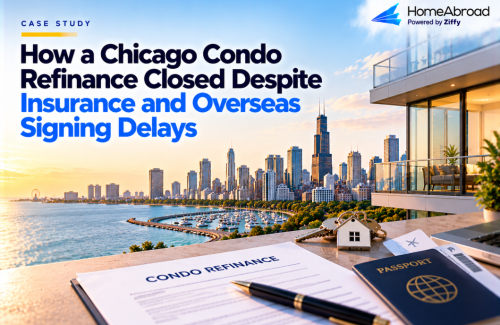
Owning a rental property in the US while living overseas comes with a particular challenge: the investment is local, but many of the decisions, documents, and signatures have to travel across borders.
For a foreign national investor refinancing a leased condominium in Chicago, Illinois, the rental income supported the proposed loan. The property was valued at $314,000, and the investor was seeking a $160,000 DSCR cash-out refinance.
But the numbers weren’t the part of the transaction that required the most attention.
A discrepancy in the condominium association’s insurance documents needed to be resolved before the lender could accept the coverage. Then, because the investor was outside the US, the final closing package had to be shipped internationally, cleared through customs, signed, and returned.
HomeAbroad ultimately funded the refinance at 50.96% LTV, with a 1.02 DSCR and a 6.99% fixed rate on a 30-year term. The experience illustrates something foreign national investors should know before refinancing a US condominium: having enough equity and rental income is only part of getting a loan funded.
Investment Highlights
The Final Refinance Structure
Loan Amount
$160,000
Appraised Value
$314,000
Loan-to-Value
50.96%
DSCR
1.02
Monthly Rental Income
$2,300
Interest Rate and Term
6.99%
30-Year Fixed
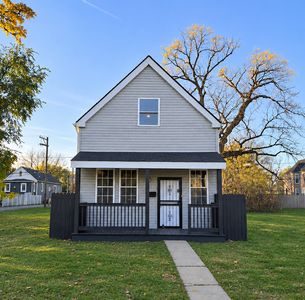
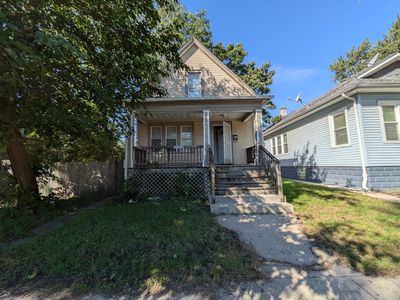
Investment Properties on Sale in Chicago Today


The Starting Point
A Rental Property Worth Refinancing From Overseas
Imagine managing a rental property thousands of miles from where you live. The tenant pays rent locally, the condominium association handles shared building responsibilities, and the property continues operating as an investment. But when it is time to refinance, the paperwork can become considerably more complicated.
This is the broader challenge illustrated by HomeAbroad’s Chicago transaction.
The actual property was a leased condominium in Illinois, owned by a foreign national investor. Its documented monthly rental income was $2,300, and its appraised value was $314,000.
The investor pursued a cash-out refinance, a type of financing that replaces an existing mortgage with a new loan and can allow an owner to access some of the property’s equity, depending on the outstanding mortgage balance and closing costs.
For an international investor, that can be useful when considering how to deploy capital without selling an income-producing property. However, the amount of actual cash released depends on the existing loan payoff and other transaction expenses.
In this case, the funded loan amount was $160,000. The available transaction summary does not specify the investor’s previous loan balance or net cash-out proceeds, so neither should be confused with the new loan amount.
THE CENTRAL FINANCING QUESTION
Could the property’s existing rental income support a cash-out refinance while the investor completed the necessary underwriting and closing requirements from outside the US?
HomeAbroad approached the transaction through a DSCR loan, using the condominium’s rental income relative to its qualifying property expenses rather than requiring US employment income or US-based tax returns as the primary qualifying basis.
The Financing Structure
How the $160,000 Refinance Was Structured
Before addressing the condominium paperwork or the international signing logistics, the refinance needed a sound financial foundation.
The Chicago condominium’s appraised value came in at $314,000. The proposed loan amount of $160,000 represented just over half that value.
The 50.96% LTV meant that the new mortgage represented considerably less than the full appraised value of the property.
At the appraised value, the difference between the property’s value and the new mortgage was $154,000. That is the property’s gross equity position immediately after the refinance based on the stated valuation and new debt amount, not the amount of cash the investor received at closing.
A lower LTV can help reduce collateral-related lending risk, although it does not eliminate other underwriting considerations. In particular, condominium project eligibility and the adequacy of rental income still had to be established.
The Rental Income Test
How $2,300 in Rent Supported the Loan
Property value answered one question: how much collateral supported the refinance?
Rental income answered another: could the condominium generate enough qualifying income to cover the monthly property payment used by the lender?
HomeAbroad used a DSCR loan, which evaluates the relationship between qualifying rental income and monthly PITIA.
PITIA generally includes principal, interest, property taxes, insurance, and applicable association dues.
A DSCR of 1.00 means the qualifying rent equals the qualifying monthly PITIA. Here, the ratio was slightly above that threshold, at 1.02.
Using the unrounded monthly figures, rent exceeded PITIA by $43.35 per month.
That difference was enough to establish rental-income coverage above 1.00 for this particular underwriting calculation. It should not, however, be interpreted as the investor’s total monthly profit.
Why a 1.02 DSCR Requires a Closer Look
The rent covered the qualifying PITIA, but the margin was narrow. Additional operating costs, including maintenance, repairs, vacancies, and property-management expenses, may affect the property’s actual cash flow beyond the lender’s DSCR calculation.
For investors, this distinction is essential: meeting a lender’s DSCR requirement is not the same as establishing a property’s overall profitability.
The financial structure supported the refinance, but it did not automatically make the condominium eligible. The next issue had little to do with the borrower’s personal finances or the property’s monthly rent.
The First Obstacle
The Condo Insurance Discrepancy That Needed an Answer
Consider being ready to refinance a property with sufficient collateral and qualifying rental income, only to discover that two documents within the same insurance package describe the condominium project differently.
That was the issue in this Chicago file.
The condominium association’s master insurance policy listed a unit count that did not match the project description attached to the policy.
Neither the tenant’s rental payment nor the property’s appraised value could resolve that inconsistency. The lender needed the condominium association to clarify the information in writing before accepting the insurance coverage.
The Documentation Issue
DOCUMENT A
Master Insurance Policy
Contained a condominium unit count that required verification.
DOCUMENT B
Attached Project Description
Showed information that did not match the master policy.
Required resolution: Written clarification from the condominium association before the lender could accept the insurance package.
Why Would a Unit-Count Mismatch Affect a Mortgage?
Unlike a standalone single-family rental, a condominium is part of a larger project. A lender may need to examine both the individual unit and the building’s shared insurance arrangements.
The association’s master policy helps document coverage affecting the condominium project, including shared structures and areas where applicable. Underwriting therefore involves more than determining whether the individual investor maintains suitable unit-level insurance.
When exhibits within an insurance package conflict, the lender may be unable to establish that the submitted documentation accurately describes the property being financed.
For this transaction, the solution was not to overlook the difference. The lender required a written explanation from the association, and the discrepancy was resolved before funding.
It’s a useful reminder for overseas investors who may rely on property managers, association representatives, or closing professionals to obtain US property documents: requesting insurance paperwork early is not enough. The information needs to be reviewed for consistency as well.
The Second Obstacle
The International Signing Challenge
Even after a lender has reviewed the property’s finances, valuation, and documentation, a mortgage cannot fund until the required closing process has been completed.
For an investor living in the US, that process may involve signing paperwork locally. For an overseas investor, physical documents can create an additional logistical hurdle.
In the Chicago transaction, the final closing package had to travel internationally to reach the borrower. The shipment needed to pass through customs, be delivered for signing, and then be returned.
These steps introduced transit time that would not ordinarily arise in the same way for a local closing.
What the Cross-Border Closing Process Involved
Preparing the Closing Package
The documents had to be prepared for the investor’s international signing process.
International Shipment
The physical package had to travel from the US to the investor’s overseas location.
Customs and Delivery
Customs processing and delivery added time to the closing logistics.
Borrower Signing and Return
The closing documents had to be signed and sent back through the international delivery process.
Closing and Funding
With the insurance issue resolved and the signed package confirmed in transit, the file proceeded to funding.
One of the more revealing details in the transaction was that the lender needed visibility into the signed package’s return shipment. The physical location of the paperwork had become part of the closing process.
This is why coordinating international signings should begin well before the intended funding date. Investors should establish whether original documents are required, what signing arrangements are acceptable, and how long international delivery and return shipments may take.
How the Deal Came Together
How HomeAbroad Brought the File to Funding
What made this refinance interesting was the combination of a financially supportable rental property and two separate closing requirements that needed resolution.
Each part of the transaction had to satisfy a different question.
Financing
Did the Property Support the Requested Loan?
The $314,000 valuation supported a $160,000 loan at 50.96% LTV, while the property’s qualifying rental income produced a 1.02 DSCR.
Condominium Eligibility
Could the Insurance Documentation Be Accepted?
The conflicting unit-count information required written clarification from the condominium association. The inconsistency was resolved before the loan funded.
International Closing
Could the Signed Documents Be Returned From Overseas?
The international closing package had to be shipped, delivered, signed, and returned. The signed package was confirmed in transit as the file moved toward funding.
Rather than treating the refinance as a single approval decision, the file required attention to the underlying financing, the condominium project documentation, and the practical realities of an international closing.
Once the insurance discrepancy had been resolved and the signed closing package was confirmed in transit, HomeAbroad completed the funding on the documented loan terms.
Funded Result
A $160,000 DSCR Cash-Out Refinance Funded on the Chicago Condo
The transaction ultimately closed as a 30-year fixed-rate DSCR cash-out refinance for the foreign national investor.
Successfully Funded
$160,000
Foreign National DSCR Cash-Out Refinance
Loan-to-Value
50.96%
DSCR
1.02
Interest Rate
6.99%
Loan Term
30 Years
The fixed-rate structure established the contractual interest rate for the 30-year loan term, while the DSCR underwriting allowed the property’s qualifying rental income to serve as the basis for evaluating payment coverage.
However, the outcome was not simply about securing a particular rate or loan amount. It was about completing a cross-border refinance despite documentation and signing requirements that could have disrupted the closing process.
Investor Takeaways
What Other International Investors Can Learn
There are several practical lessons in this transaction for foreign nationals considering a refinance on a US condominium or another rental property.
1. Review Condominium Documents Before They Become a Closing Issue
Request the association’s current master insurance policy and supporting project information early. Check whether the unit counts, project descriptions, and other relevant details agree across the documents. If something conflicts, ask the association or insurance agent for written clarification.
2. Allow Time for International Document Delivery
Do not assume overseas signing will follow the same timeline as a domestic closing. Confirm the signing requirements, courier arrangements, customs considerations, and return-shipping process before the documents are dispatched.
3. Understand What Your DSCR Actually Measures
The Chicago property achieved a 1.02 DSCR, meaning qualifying rent slightly exceeded monthly PITIA. Investors should also calculate their broader operating costs to understand cash flow after expenses that may not be reflected in the underwriting ratio.
4. Separate Your Loan Amount From Your Cash-Out Proceeds
A $160,000 cash-out refinance does not mean the investor receives $160,000 in cash. The actual amount available depends on the outstanding loan payoff, closing expenses, and any other applicable deductions.
5. Work With a Financing Team Familiar With Overseas Transactions
Foreign national financing can involve condominium-specific documentation and additional cross-border coordination. HomeAbroad’s Chicago transaction shows how resolving those requirements alongside the property’s financial qualification can help bring a refinance to funding.
The Bigger Picture
A Strong Property Doesn’t Eliminate Closing Challenges
From a financial standpoint, this Chicago condominium offered sufficient appraised value to support the proposed $160,000 refinance at a 50.96% LTV. Its rental income also produced a DSCR above 1.00.
Yet neither of those facts resolved the insurance inconsistency or shortened the journey of an international closing package.
The lesson is that a successful foreign national refinance depends on more than loan eligibility. Property documentation, closing arrangements, and international logistics all need to work together. In this case, they did, and HomeAbroad funded the transaction on the documented terms.
Frequently Asked Questions