


Editorial Integrity
Making informed real estate decisions starts with having the right knowledge. At HomeAbroad, we offer US mortgage products for foreign nationals & investors and have a network of 500+ expert HomeAbroad real estate agents to provide the expertise you need. Our content is written by licensed mortgage experts and seasoned real estate agents who share insights from their experience, helping thousands like you. Our strict editorial process ensures you receive reliable and accurate information.
Colorado’s median gross rental yield is 4.33%, below the US average of 6.34%, making market selection important for investors.
Montrose and Grand Junction offer a combination of rental yield and five-year home value appreciation.
Foreign nationals can generally purchase Colorado investment property without US citizenship or residency, but ownership does not grant immigration status.
HomeAbroad offers DSCR loans for eligible foreign-national investors without an established US credit history, along with an AI-native investment property platform to help discover US investment opportunities.
Colorado investment property costs more than the US average and earns a lower gross yield, yet six of its metros have appreciated 24% to 42% in five years while Denver has barely moved. The median home value across the 16 Colorado metros in this analysis is $521,558, the median rent is $1,945 a month, and gross rental yields run from 3.1% in Edwards to 5.7% in Pueblo.
The markets with the strongest combination of yield, appreciation, and current momentum are on the Western Slope: Montrose, Glenwood Springs, and Grand Junction lead the ranking, and the Front Range cities most international buyers search for first sit at the bottom.
Foreign nationals can generally buy property in Colorado with the same ownership rights as US citizens, and owning it does not create a visa, residency, or immigration status. This article ranks 12 Colorado metros on five metrics, shows the full comparison table, explains how to match a market to a yield-first or appreciation-first strategy, and closes with how a DSCR loan from HomeAbroad fits a purchase made from outside the US.
Table of Contents
Colorado Investment Property Market at a Glance
Colorado is an appreciation state with a yield problem, and the two halves of the state are now moving in opposite directions. The figures below cover the 16 Colorado metropolitan areas that report both a home value index and a rent index as of August 2026.
Home Values, Rents, and Yields Across 16 Colorado Metros
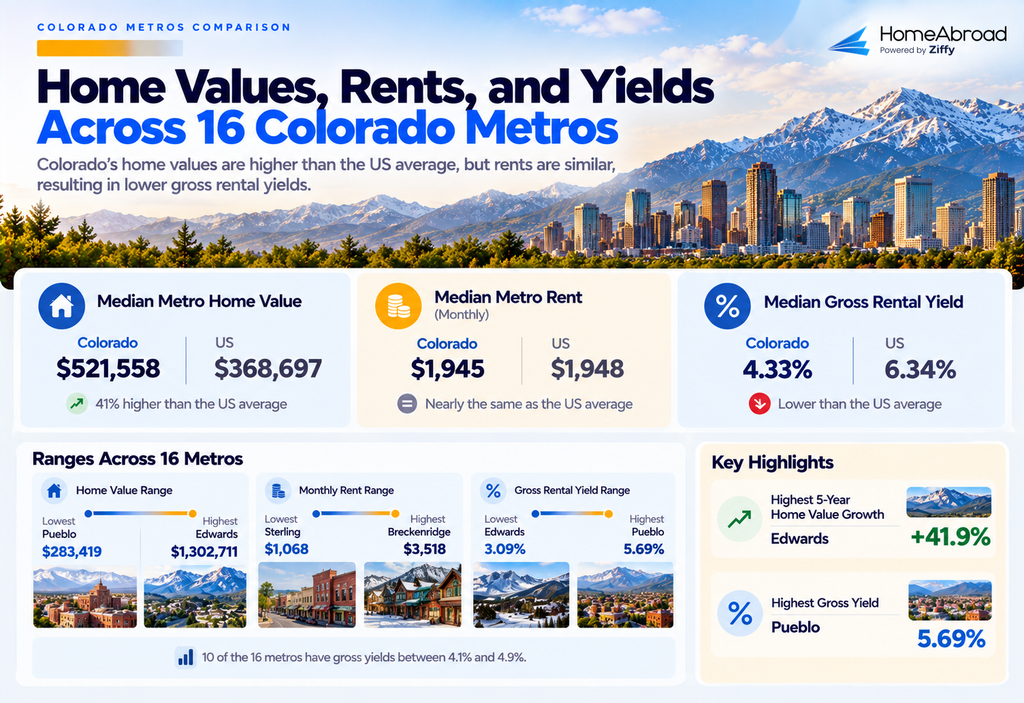
The typical Colorado metro home is worth $521,558, about 41% more than the US figure of $368,697 in the same dataset. Rent does not scale with price: the median Colorado metro rent is $1,945 a month, within a few dollars of the US figure of $1,948. That gap is why the median gross rental yield across Colorado metros is 4.33% while the US figure is 6.34%.
Entry prices range from $283,419 in Pueblo to $1,302,711 in Edwards, in the Vail Valley. Monthly rents range from $1,068 in Sterling to $3,518 in Breckenridge. Gross yields fall between 3.09% in Edwards and 5.69% in Pueblo, with 10 of the 16 metros clustered between 4.1% and 4.9%.
A buyer who wants cash flow from day one will find Colorado’s numbers thin next to lower-priced states. A buyer who wants a property that holds and builds value has a stronger case, provided they choose the right side of the mountains.
- Median metro home value: $521,558
- Median metro rent: $1,945 a month
- Median gross rental yield: 4.33%
- Highest 5-year home value growth: Edwards, +41.9%
- Highest gross yield: Pueblo, 5.69%
Two Colorados: Front Range Versus Western Slope
The Front Range is the urban corridor that runs north to south along Interstate 25 on the eastern side of the Rocky Mountains. It holds Denver, Boulder, Fort Collins, Greeley, Colorado Springs, and Pueblo, and most of the state’s population. The Western Slope is everything west of the Continental Divide, a region of smaller cities and resort towns that includes Grand Junction, Montrose, Glenwood Springs, Durango, and the Vail and Steamboat valleys.
Over the five years to August 2026, home values in the six Front Range metros rose by an average of 6.0%. In the seven Western Slope and mountain metros, the average was 30.2%. Every Front Range metro peaked in June or July 2022 and now sits between 4.0% and 9.5% below that peak. Six of the seven Western Slope and mountain metros are at or within 0.1% of an all-time high. Breckenridge is the exception, 13.9% below its July 2022 peak.
The past year widened the gap. Home values fell in eight of the 16 metros, all six Front Range cities among them, and none of the eight is on the Western Slope. Values rose in Glenwood Springs (+5.1%), Steamboat Springs (+4.1%), Durango (+3.0%), Edwards (+2.9%), Montrose (+2.5%), and Grand Junction (+2.0%). Rents tell a similar story: Denver’s rent fell 0.5% while Montrose’s rose 4.2%.
What Gross Yield Does and Does Not Tell You
Gross rental yield is annual rent divided by home value. A $432,132 home renting for $1,728 a month earns $20,730 a year, which is a 4.80% gross yield. The figure is useful for comparing markets because it strips out everything specific to one property or one owner.
It also leaves out everything that determines what you actually keep. Property tax (an annual tax levied by the county on the assessed value of the home), landlord insurance, homeowners association dues where they apply (fees charged by a community association for shared amenities and maintenance), vacancy between tenants, property management, repairs, and the cost of financing all come out of that gross figure. Net yield on a Colorado rental is lower than the gross figures in this article, and how much lower depends on the county, the property, and how it is managed. Every yield quoted in this article is gross.
The 6 Best Colorado Markets for Rental Property Investment in 2026
The ranking below scores 12 Colorado metros on gross yield, five-year home value growth, five-year rent growth, and one-year change in both. Yield counts for 30% of the score and growth for the remaining 70%, so a market can rank well without the highest yield if its values and rents have been rising. Four metros with less than three years of rent history were left out of the ranking and appear in the watch list after the profiles. The method and weights are set out in full in the How We Ranked the Markets section.
1. Montrose
- Home value: $493,897 | Rent: $2,004 a month | Annual rent: $24,048
- Gross yield: 4.87% | Price-to-rent ratio: 20.5
- Home value change: +2.5% in one year, +25.1% in five years, +103.7% in ten years
Montrose is the only metro in the dataset that scores in the top tier on both yield and appreciation. Its 4.87% gross yield is the second highest among the 12 ranked metros, behind only Pueblo, and its values have compounded at 4.6% a year since 2021. Rent rose 4.2% in the twelve months to August 2026, the fastest one-year rent gain of any ranked metro, and home values are within 0.1% of the March 2026 high.
The rent series for Montrose begins in April 2023, so there is no five-year rent growth figure, and the ranking weights were redistributed across its other four metrics. Montrose is a small market, and a buyer should expect fewer listings and a thinner pool of tenants and buyers than in Grand Junction, an hour’s drive north. For an investor who wants income and growth from the same property, it is the strongest profile in Colorado.
Investment Properties on Sale in Montrose Today



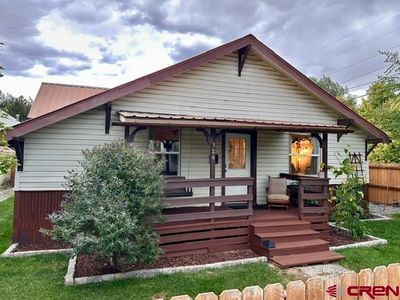
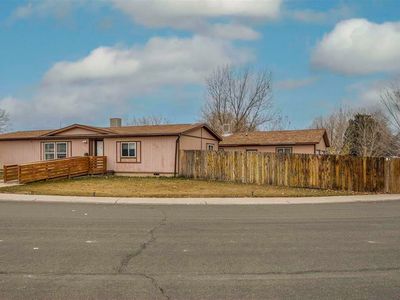
2. Glenwood Springs
- Home value: $980,626 | Rent: $2,822 a month | Annual rent: $33,859
- Gross yield: 3.45% | Price-to-rent ratio: 29.0
- Home value change: +5.1% in one year, +39.6% in five years, +110.5% in ten years
Glenwood Springs has the strongest growth record of any Colorado metro with a full rent history. Home values have risen 39.6% in five years, a 6.9% annual rate, and the 5.1% gain in the past year is the fastest in the state. Rents have moved with them: +41.8% over five years and +3.6% in the past year. Values set a new high in August 2026.
The cost of that growth is the entry price. At $980,626, a Glenwood Springs home costs more than twice a Grand Junction home and earns a gross yield a full point lower, at 3.45%. The price-to-rent ratio of 29 means rent covers a smaller share of the purchase price each year than in any top-six market except Edwards and Durango, which matters for a buyer relying on rental income to qualify for financing. Glenwood Springs suits an investor who is buying for appreciation and can carry the property on a thin rental margin.
Investment Properties on Sale in Glenwood Springs Today
3. Grand Junction
- Home value: $432,132 | Rent: $1,728 a month | Annual rent: $20,730
- Gross yield: 4.80% | Price-to-rent ratio: 20.8
- Home value change: +2.0% in one year, +24.2% in five years, +98.9% in ten years
Grand Junction is the most balanced market in the dataset. Its 4.80% gross yield is within seven basis points of Montrose, its five-year appreciation of 24.2% is within a point, and it has a complete rent history back to 2015 showing rents up 32.3% in five years and 2.0% in the past year. Values are within 0.1% of the June 2026 high.
It is also the largest city on the Western Slope, with a Zillow size rank of 280 against Montrose’s 628, which means more inventory, more tenants, and an easier exit. The entry price of $432,132 is the lowest of the three Western Slope leaders and below the Colorado metro median. For a first Colorado purchase by an investor based abroad, Grand Junction offers the best combination of yield, growth, and liquidity in this analysis.
Investment Properties on Sale in Grand Junction Today
4. Cañon City
- Home value: $339,690 | Rent: $1,359 a month | Annual rent: $16,304
- Gross yield: 4.80% | Price-to-rent ratio: 20.8
- Home value change: -1.2% in one year, +15.4% in five years, +99.3% in ten years
Cañon City, in the Arkansas River valley southwest of Colorado Springs, is the lowest-priced market in the top six and matches Grand Junction’s 4.80% gross yield. Values have risen 15.4% in five years, about 2.9% a year, and rents rose 3.5% in the past year.
It is also the only top-six market where home values fell over the past year, down 1.2% and 1.6% below the June 2025 peak. Its rent series begins in September 2023, so the five-year rent figure is unavailable. Cañon City is the entry-level option in this ranking: a sub-$350,000 purchase with a mid-range yield and a growth record that has cooled recently.
Investment Properties on Sale in Cañon City Today
5. Edwards
- Home value: $1,302,711 | Rent: $3,358 a month | Annual rent: $40,300
- Gross yield: 3.09% | Price-to-rent ratio: 32.3
- Home value change: +2.9% in one year, +41.9% in five years, +121.0% in ten years
Edwards is the resort market of the Vail Valley and the purest appreciation play in Colorado. Home values have risen 41.9% in five years, the highest in the dataset, at a 7.3% annual rate, and they stand at an all-time high. Rents rose 3.7% in the past year.
It also has the lowest gross yield in the state at 3.09% and the highest entry price at $1.3 million. With a price-to-rent ratio above 32, annual rent covers about 3% of the purchase price, so rental income alone will cover a smaller share of the mortgage payment, taxes, and insurance than in any other Colorado market. That is the single most important figure for a foreign investor planning to qualify on the property’s rent rather than personal income. Edwards is for a buyer with a long holding period, substantial equity, and a view that Vail Valley prices will keep rising; it is not a cash-flow purchase.
Investment Properties on Sale in Edwards Today
6. Durango
- Home value: $687,200 | Rent: $1,967 a month | Annual rent: $23,605
- Gross yield: 3.43% | Price-to-rent ratio: 29.1
- Home value change: +3.0% in one year, +34.1% in five years, +82.7% in ten years
Durango, in the southwest corner of the state, has compounded home values at 6.0% a year since 2021 and set a new high in August 2026. Rents rose 22.6% over five years.
The figure to watch is one-year rent growth, which has slowed to 0.8%, the weakest in the top six. The 3.43% gross yield sits in the same band as Glenwood Springs and comes with a lower entry price of $687,200. Durango fits an appreciation-first investor who wants a smaller purchase than Glenwood Springs or Edwards and accepts that rents are currently flat.
Two mountain markets were excluded from the ranking because their rent history is too short to compare, not because the data looks weak. Steamboat Springs has a home value of $1,124,146, up 39.3% in five years and 144.2% in ten, with a 3.49% gross yield and rent data only since February 2025. Breckenridge has a home value of $969,940, a 4.35% gross yield, five-year value growth of 7.0%, and rent data since February 2024. Both will be eligible for the ranking once three years of rent data accumulate.
Investment Properties on Sale in Durango Today
Colorado Rental Market Comparison Table
All 12 ranked metros, August 2026. Use the columns to apply your own weighting: a yield-first buyer sorts by the gross yield column, an appreciation buyer by the five-year value column, and a buyer timing an entry by the distance from peak.
Metro | Home Value | Monthly Rent | Gross Yield | Price-to-Rent |
|---|---|---|---|---|
Montrose | $493,897 | $2,004 | 4.87% | 20.5 |
Glenwood Springs | $980,626 | $2,822 | 3.45% | 29.0 |
Grand Junction | $432,132 | $1,728 | 4.80% | 20.8 |
Cañon City | $339,690 | $1,359 | 4.80% | 20.8 |
Edwards | $1,302,711 | $3,358 | 3.09% | 32.3 |
Durango | $687,200 | $1,967 | 3.43% | 29.1 |
Fort Collins | $549,219 | $1,975 | 4.32% | 23.2 |
Pueblo | $283,419 | $1,344 | 5.69% | 17.6 |
Colorado Springs | $448,492 | $1,787 | 4.78% | 20.9 |
Boulder | $712,024 | $2,222 | 3.74% | 26.7 |
Greeley | $490,746 | $1,692 | 4.14% | 24.2 |
Denver | $559,705 | $1,922 | 4.12% | 24.3 |
What About Denver and Colorado Springs?
Most international buyers researching Colorado start with Denver or Colorado Springs, and neither made the top six. Yield did not keep them out: Colorado Springs has the third-highest gross yield among ranked metros and Denver’s is mid-table. What held them back is five years of flat values and a slow recovery from the 2022 peak.
Denver: High Liquidity, Flat Five-Year Returns
Denver is the largest and most liquid property market in Colorado, with a Zillow size rank of 19 nationally, and it has the weakest growth metrics of the 12 ranked metros. The typical home is worth $559,705, 9.0% below the June 2022 peak and up only 4.5% in five years. Values fell 1.9% in the past year.
Rent is the larger concern. Denver’s rent of $1,922 a month is down 0.5% from a year earlier and up only 9.5% over five years, the smallest five-year rent gain of any ranked metro and well behind the 23.1% US figure in the same dataset. The gross yield of 4.12% is below the Colorado median. Denver is the place to buy if liquidity and tenant depth matter more to you than growth, and the 9% discount to the 2022 peak gives a patient buyer a better entry than they would have had three years ago. The HomeAbroad ranking of the best places to buy rental property in the US reached the same conclusion and left Denver off its 2026 list.
Colorado Springs: Solid Yield, Values Still Below the 2022 Peak
Colorado Springs has the best yield on the Front Range. Its gross yield of 4.78% is within two basis points of Grand Junction and Cañon City, and its $448,492 entry price is below the state median. Rent rose 2.3% in the past year, the strongest one-year rent gain among the six Front Range metros.
What holds it back is the same five-year pattern as Denver: values up 4.6% since 2021, down 1.4% in the past year, and 8.0% below the July 2022 peak. Five-year rent growth of 12.9% is the second weakest among ranked metros. Colorado Springs is a reasonable yield purchase at a discount to peak, and it is the Front Range market most likely to move up this ranking if values resume growing.
Pueblo, Fort Collins, Boulder, and Greeley in Brief
Pueblo has the highest gross yield in Colorado at 5.69% and the lowest entry price at $283,419, with a price-to-rent ratio under 18. It also has the sharpest one-year value decline in the dataset at -2.4%, five-year growth of just 4.7%, and rent growth of 0.4% in the past year. It is a cash-flow market whose asset has not been appreciating.
Fort Collins is the steadiest performer on the Front Range. Values are up 10.5% in five years, the best of the six, and only 4.0% below peak. Rents have risen 22.3% over five years, the gross yield is 4.32%, and the one-year value change of -0.5% is the mildest Front Range decline. At rank seven, it is the first market outside the top six and the one to consider if you want a university-anchored Front Range city with a growth record.
Boulder is the most expensive Front Range metro at $712,024 and the furthest below its peak at -9.5%. Its 3.74% gross yield is the lowest on the Front Range.
Greeley is the second-cheapest Front Range metro at $490,746 and has a 4.14% gross yield, but values fell 2.1% in the past year and rents rose just 0.1%, the flattest rent trend among ranked metros apart from Denver.
Choosing a Colorado Market by Investment Strategy
The ranking rewards a balance of yield and growth. Your own priorities may weight them differently, so the groupings below match markets to the three strategies most foreign investors bring to a US purchase, plus a fourth for buyers working to a price ceiling.
Yield-First Strategy
If monthly income is the goal, the order is Pueblo (5.69%), Montrose (4.87%), Grand Junction and Cañon City (4.80% each), and Colorado Springs (4.78%). Pueblo leads by nearly a point, but its values have fallen 2.4% in the past year and risen only 4.7% in five, so the income comes with a flat asset. Montrose and Grand Junction give up less than a point of yield for five-year appreciation above 24%.
One figure the data settles: no Colorado metro meets the 1% rule, the rule of thumb that monthly rent should equal 1% of the purchase price. The highest monthly rent-to-value ratio in the state is Pueblo at 0.47%. The top-six markets range from 0.26% in Edwards to 0.41% in Montrose. A buyer screening Colorado on the 1% rule will exclude every market; a buyer screening on the 0.5% level, which some investors use for appreciation markets, will keep only Pueblo and will miss it by three basis points.
Appreciation-First Strategy
The five-year leaders are Edwards (+41.9%), Glenwood Springs (+39.6%), Durango (+34.1%), and Montrose (+25.1%). All four are at or within 0.1% of record highs, which means a buyer is paying full price for the growth record rather than buying a dip.
The price-to-rent column shows what that growth costs in income. Edwards at 32.3, Durango at 29.1, and Glenwood Springs at 29.0 earn roughly a third less rent per dollar invested than Montrose at 20.5. Of the four, Montrose is the only one where the appreciation does not require giving up yield.
Strong appreciation over the past five years is useful context, but it shouldn’t be the sole reason to buy. Investors need to consider the price they’re paying today, the rental income the property can realistically generate, and whether the investment still fits their plans if appreciation slows.

Balanced Strategy
Grand Junction scores above the median of the 12 ranked metros on all five ranking metrics, and Montrose does so on all four for which it has data. Both have gross yields above 4.8%, five-year appreciation between 24% and 25%, values within 0.1% of their highs, and positive one-year change in both rent and value. Grand Junction has the fuller data history and the larger market; Montrose has the slightly higher yield and faster recent rent growth. A buyer choosing between them is choosing between liquidity and a marginally stronger income profile.

When evaluating an investment market, I look beyond recent appreciation. Investors should understand the local rental demand, the property’s expected operating costs, and how easily they could manage or sell the property if their plans change. Strong historical growth alone doesn’t establish whether a property is a sound investment.
Entry Price Under $450,000
Four ranked metros have a typical home value below $450,000: Pueblo ($283,419), Cañon City ($339,690), Grand Junction ($432,132), and Colorado Springs ($448,492). Entry price matters more for a foreign investor than for a domestic one because the down payment, closing costs, and cash reserves are usually funded from abroad, where currency conversion and transfer timing add cost and friction. Of the four, Grand Junction is the only one with positive one-year value growth and five-year appreciation above 10%.
How We Ranked the Markets
The figures in this article come from two Zillow datasets released for August 2026: the Zillow Observed Rent Index (ZORI) for all homes including multifamily, smoothed, and the Zillow Home Value Index (ZHVI) for the middle price tier of single-family homes and condos, smoothed and seasonally adjusted. Both are reported at the metropolitan statistical area level. Five-year comparisons use August 2021 as the base, ten-year comparisons use August 2016, and one-year comparisons use August 2025.
Sixteen Colorado metros appear in both datasets. Craig has a home value series but no rent series and was excluded. Four metros were excluded from the ranking because their rent series is shorter than 36 months, which makes growth comparisons unreliable: Fort Morgan (data from April 2026), Sterling (October 2025), Steamboat Springs (February 2025), and Breckenridge (February 2024). Their current values, rents, and yields appear in the article for reference.
The calculations:
- Gross rental yield = annual rent ÷ home value
- Price-to-rent ratio = home value ÷ annual rent
The limits of this method are worth stating. The indexes are metro-level estimates of a typical home and a typical rent, not figures for any specific property or neighborhood. Yields are gross and ignore taxes, insurance, vacancy, management, repairs, and financing.
Past growth describes what happened and does not forecast what comes next. A metro with a short rent history can rank well or poorly on fewer metrics than its peers. And the weights are a judgment: a reader who values yield above growth will reorder the list, which is why the full comparison table is included.
Colorado Rules Foreign Investors Should Verify Before Buying
The numbers above describe the market. Three sets of rules sit outside the data and change what a Colorado rental is worth to an owner based abroad.
Ownership Rights for Foreign Nationals
Colorado places no residency or citizenship requirement on owning residential property, and a nonresident alien can hold title to a Colorado home in their own name or through a US entity on the same terms as a US citizen. Federal rules still apply, including sanctions screening and the reporting obligations that come with US rental income.
Owning a Colorado property does not create a visa, a right of residence, or any immigration status. The purchase and any later immigration decision are separate processes, and a qualified immigration attorney is the right source for the second one. The general rules for buying property in the US as a foreign national apply in Colorado without a state-specific exception.
Landlord-Tenant and Short-Term Rental Rules
Colorado’s legislature has changed statewide landlord-tenant law in recent sessions, including rules on when a lease can be ended and what a landlord must do before filing for eviction. A buyer should read the current statute, or have a Colorado attorney summarize it, before setting lease terms.
Short-term rental rules are set locally, and the mountain markets in this ranking are where they bite hardest. Glenwood Springs, Edwards, Durango, Steamboat Springs, and Breckenridge each sit in or near a jurisdiction that licenses, caps, or taxes short-term rentals.
The yields and rents in this article are for long-term rentals. An investor underwriting a mountain property on short-term rental income is relying on a different revenue model, a different cost structure, and a set of rules that can change at the next town council meeting.
Taxes Nonresident Owners Should Plan For
Rental income earned by a nonresident alien is taxable in the US, and the owner’s choice of how it is taxed affects what they keep. When the property is sold, FIRPTA withholding rules require the buyer to withhold a tiered percentage of the gross sale price, 0%, 10%, or 15% depending on the price and the buyer’s intended use, unless a reduction is approved in advance.
The capital gains tax rules for foreign nationals selling US property cover the rates, the refund process, and exit planning. Colorado also levies its own state income tax on rental income from Colorado property. A cross-border tax professional should review the structure before closing, because decisions made at purchase, including whether to buy personally or through an entity, are difficult to unwind later.
Financing a Colorado Rental Property as a Foreign National
A DSCR loan is a practical financing option for foreign nationals investing in Colorado rental properties. HomeAbroad evaluates qualifying rental income against the property’s mortgage payment, allowing eligible investors to qualify without relying on US employment income or an established US credit history.
HomeAbroad offers DSCR financing for foreign-national investors, including a No-Ratio DSCR option for eligible properties that don’t meet the standard DSCR requirement. Investors can also use HomeAbroad’s AI-native investment property platform to discover potential US real estate investment opportunities.

Steven Glick
Director of Mortgage Sales · HomeAbroad
For foreign nationals investing in US rental property, DSCR financing can simplify the qualification process by focusing on the property’s rental income. Preparing the required financial and property documentation early can help keep the application moving.
Planning to invest in Colorado real estate? HomeAbroad brings together investment property discovery and financing options to help foreign-national investors move forward with their US real estate investment plans.
Get pre-qualified with HomeAbroad to discuss your investment goals and explore your financing options before making an offer.
Frequently Asked Questions
Is Colorado a Good Place to Invest in Real Estate?
It depends on which Colorado. The median gross rental yield across the state’s 16 metros is 4.33%, below the US figure of 6.34%, so Colorado is not a cash-flow state. Western Slope markets such as Montrose, Grand Junction, Glenwood Springs, and Durango have appreciated 24% to 40% in five years and are at record highs. The six Front Range metros, including Denver and Colorado Springs, have appreciated 4% to 11% over the same period and sit 4% to 9.5% below their 2022 peaks.
Can a Foreign National Buy Investment Property in Colorado?
Yes. Foreign nationals can generally buy residential property in Colorado and hold title in their own name or through a US entity. Ownership does not provide a visa, residency, or immigration status. Financing is available without an established US credit history through DSCR loan programs such as HomeAbroad’s, which qualify the loan on the property’s rental income.
Which Colorado City Has the Highest Rental Yield?
Pueblo, at a gross yield of 5.69% on a typical home value of $283,419 and rent of $1,344 a month. The trade-off is growth: Pueblo’s home values fell 2.4% in the past year and have risen only 4.7% in five years. Gross yield excludes property tax, insurance, vacancy, management, and financing costs.
Does Any Colorado Market Meet the 1% Rule?
No. The 1% rule holds that monthly rent should equal at least 1% of the purchase price. The highest monthly rent-to-value ratio among Colorado metros is Pueblo at 0.47%, and the six top-ranked markets range from 0.26% in Edwards to 0.41% in Montrose. Colorado is priced as an appreciation market, and the 1% rule screens out all of it.
Is Denver a Good Place to Buy a Rental Property in 2026?
Denver offers the deepest tenant pool and the most liquid resale market in Colorado, and the weakest growth record of the 12 ranked metros. Its gross yield is 4.12%, home values are up 4.5% in five years and 9.0% below the June 2022 peak, and rents fell 0.5% over the past year. It suits a buyer who values liquidity over growth and wants to enter below the prior peak.
Can I Get a DSCR Loan in Colorado Without a US Credit History?
Yes. HomeAbroad offers DSCR loans to eligible foreign-national investors without requiring an established US credit history. Qualification focuses primarily on the property’s rental income relative to its mortgage payment.