


Editorial Integrity
Making informed real estate decisions starts with having the right knowledge. At HomeAbroad, we offer US mortgage products for foreign nationals & investors and have a network of 500+ expert HomeAbroad real estate agents to provide the expertise you need. Our content is written by licensed mortgage experts and seasoned real estate agents who share insights from their experience, helping thousands like you. Our strict editorial process ensures you receive reliable and accurate information.
Illinois offers an average rental yield of 7.5%, with Peoria reaching an 8.08% gross yield among the six ranked markets.
Rockford leads in five-year home value appreciation, with prices increasing 52.7% between August 2021 and August 2026.
Chicago offers higher rental income in dollar terms, while Peoria and Kankakee provide lower entry prices for investors comparing acquisition costs and rental yields.
Foreign nationals can finance Illinois rental properties through HomeAbroad’s DSCR loans with no US credit history required, qualifying primarily based on the property’s rental income.
Table of Contents
Illinois offers foreign investors a combination of relatively affordable property prices, rental income potential, and long-term appreciation opportunities. The state’s average rental yield is 7.5%, while the Peoria metro leads the six ranked markets in this article with an 8.08% gross rental yield.
Rockford has recorded the strongest five-year home value appreciation among the ranked markets at 52.7%. The following guide examines home values, typical rents, rental yields, and price growth across Illinois metros to help international investors compare potential investment locations.
Illinois Investment Property Market Snapshot (2026):
- $2,210 typical monthly rent in the Chicago metro, the highest among Illinois metros in this comparison
- 7.5% average rental yield across Illinois, based on the supplied state-level figure
- 8.08% gross rental yield in the Peoria metro, the highest among the six ranked markets
- 52.7% five-year home value growth in Rockford, from August 2021 to August 2026
Illinois Housing Market at a Glance for Investors (2026)
Illinois offers an average rental yield of 7.5%, giving foreign investors a useful starting point when comparing its investment property market with other states. Across the 25 Illinois metro areas covered here, typical home values range from approximately $101,000 in the Macomb and Danville metros to $357,265 in the Chicago metro. All 25 are below the US typical home value of $368,697. Typical monthly rents range from $781 in the Charleston metro to $2,210 in the Chicago metro, compared with the US figure of $1,948.
Illinois has also recorded meaningful price and rent growth over the past five years. Among the eight metros with five full years of comparable figures, seven exceeded the US home value growth rate of 20.3% between August 2021 and August 2026. All eight exceeded the national rent growth rate of 23.1%.
In seven of these eight metros, rents grew faster than home values, improving gross rental yields over the period. This matters to foreign investors because acquisition costs influence the required down payment, while rent relative to property value provides an initial indication of income potential. Investors comparing Illinois with other locations can also review our guide to the best places to buy rental property in the US.
Home Values and Appreciation in Illinois Metros
Rockford has led Illinois on appreciation over both five years and the past twelve months, while Chicago has added a similar dollar amount on a much higher base.
Five-Year Appreciation, August 2021 to August 2026
The typical home value in the Rockford metro rose from $146,893 to $224,246, a gain of 52.7%, or about 8.8% a year. Peoria followed at 37.1% ($127,493 to $174,841) and Bloomington at 35.4%. Champaign, Kankakee and Springfield each gained between 30% and 31%.
The Chicago metro gained 27.4%, from $280,505 to $357,265. In dollars, that $76,760 increase is almost the same as Rockford’s $77,353. A slower percentage rate on a bigger price can still mean similar equity growth per property. Carbondale, at 19.1%, is the only one of the eight metros with full data that trailed the US gain of 20.3%.
The Last 12 Months
From 2025 to 2026, every one of the eight metros grew faster than the US, where the typical home value rose 1.2%. Rockford led again at 8.7%, followed by Springfield at 7.9% and Peoria at 6.7%. Kankakee (6.0%), Champaign (5.3%) and Chicago (4.9%) were in the middle. Bloomington (1.7%) and Carbondale (1.9%) slowed sharply compared with their five-year pace.
One year of price data shows recent conditions. It says little on its own about the next twelve months, which is why the ranking later in this article gives one-year growth a smaller weight than five-year growth.
Rents and Rent Growth Across Illinois
Typical rent in Illinois depends heavily on the metro, and in most metros it has grown faster than home prices since 2021.
Typical Rents by Illinois Metro
The Chicago metro’s typical rent of $2,210 a month is the only Illinois figure above the US level of $1,948. Most of the larger downstate metros fall between about $1,150 and $1,400: Kankakee at $1,392, Champaign at $1,368, Bloomington at $1,342, Rockford at $1,266, Springfield at $1,197 and Peoria at $1,178. The lowest typical rents are in smaller metros such as Carbondale ($831), Macomb ($833) and Charleston ($781).
For an investor, rent counts in relation to the price paid, which the gross yield section below measures.
Rents Grew Faster Than Home Prices in Most Metros
Between August 2021 and August 2026, rent growth beat home-value growth in seven of the eight metros with full data. Rockford posted the largest rent increase at 47.4% ($859 to $1,266), followed by Bloomington at 42.3% and Peoria at 41.9%. In the Chicago metro, typical rent rose by $563 a month, from $1,647 to $2,210, a 34.2% increase.
When rent grows faster than price, gross yield rises. The Chicago metro’s gross yield went from 7.05% to 7.42% over the five years, and Peoria’s went from 7.81% to 8.08%. Rockford moved the other way. Its prices rose 52.7% while its rents rose 47.4%, so its gross yield slipped from 7.02% to 6.77%. A buyer in Rockford today pays more for each dollar of rent than a buyer did in 2021.
Gross Rental Yields: Where Rent Covers the Price Best
Gross rental yield shows a year of rent as a share of the price. It is the quickest way to compare income across metros with very different price levels.
Gross rental yield = (typical monthly rent × 12) ÷ typical home value
For the Peoria metro, a typical rent of $1,177.66 × 12 = $14,132 a year. Divided by the typical home value of $174,841, that is a gross yield of 8.08%.
The six ranked markets in this article have gross rental yields ranging from 6.17% in Bloomington to 8.08% in Peoria. Five of the six exceed the US benchmark of 6.34%. Three smaller metros show higher yields: Danville at 10.15%, Decatur at 10.15%, and Macomb at 9.86%. Their typical home values range from approximately $101,000 to $127,000, but their rental histories are shorter.
Comparable rent figures begin in 2022 for Danville, 2023 for Decatur, and 2026 for Macomb. These markets may appeal to investors seeking higher gross yields, but their shorter records make it harder to assess rental growth over time. They are therefore excluded from the six-market ranking.
The price-to-rent ratio flips the same comparison: typical home value divided by a year of rent. The Peoria metro’s ratio of 12.4 means the typical home costs about 12.4 years of rent. The US ratio is 15.8.
The rent index includes apartments and the home-value index does not. Treat these yields as a way to compare metros with each other, and expect the yield on a specific property to differ.

Steven Glick
Director of Mortgage Sales · HomeAbroad
A high gross rental yield does not always translate into a strong DSCR. Property taxes, insurance premiums, maintenance costs, and vacancy can reduce the cash flow available to cover the mortgage payment. Before financing a rental, investors should evaluate the property’s actual expenses and qualifying rental income to understand how comfortably it can support the loan.
Illinois Rental Markets Compared
The table puts the six ranked markets side by side.
Metro | Typical home value | Typical monthly rent | Gross yield | Five-year value growth | Five-year rent growth |
|---|---|---|---|---|---|
Peoria | $174,841 | $1,178 | 8.0% | 37.1% | 41.9% |
Rockford | $224,246 | $1,266 | 6.7% | 52.7% | 47.4% |
Kankakee | $226,806 | $1,392 | 7.3% | 30.8% | 34.8% |
Champaign | $239,660 | $1,368 | 6.8% | 30.9% | 37.2% |
Chicago | $357,265 | $2,210 | 7.4% | 27.4% | 34.2% |
Bloomington | $261,173 | $1,342 | 6.1% | 35.4% | 42.3% |
Best Places to Invest in Illinois: Top 6 Rental Markets
Peoria and Rockford lead the ranking by a wide margin, with Kankakee, Champaign, Chicago and Bloomington completing the top six. Figures refer to the full metro area in each case.
1. Peoria: Highest Gross Yield Among Ranked Markets
Investment Properties Listed Today on Sale in Peoria
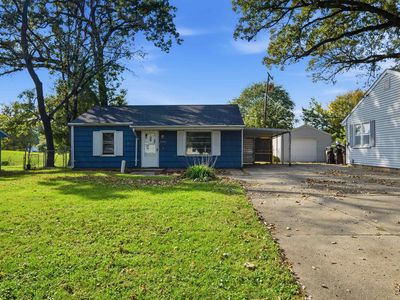



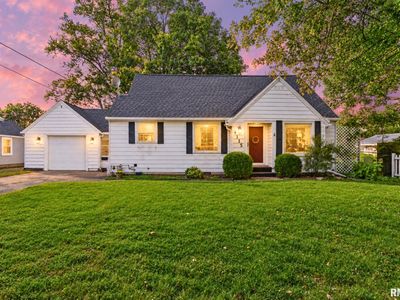
Typical value $174,841 · Typical rent $1,178 · Gross yield 8.08% · Five-year value growth 37.1% · Five-year rent growth 41.9%
The Peoria metro scored 85.6 of 100, the top result, because it pairs the highest gross yield of the eight eligible metros with growth above the US level on both price and rent. At $174,841, it also has the lowest typical home value of the six markets here, so a given down payment percentage takes less cash. Rent grew a little faster than prices over five years, lifting the gross yield from 7.81% to 8.08%. Over the past year, values rose 6.7% and rents 5.4%.
The trade-off is market size. Peoria offers a smaller pool of properties and renters than the Chicago metro, which may limit the range of investment opportunities available at a given time. It may suit investors who prioritize rental income relative to acquisition cost and are comfortable investing in a smaller market.
2. Rockford: Fastest Appreciation in Illinois
Investment Properties Listed Today on Sale in Rockford
Typical value $224,246 · Typical rent $1,266 · Gross yield 6.77% · Five-year value growth 52.7% · Five-year rent growth 47.4%
Rockford scored 81.2. It posted the largest five-year gains of the eight eligible metros on both measures, with typical value up 52.7% and typical rent up 47.4%. It also led the past year, with values up 8.7% and rents up 6.7%.
That growth has squeezed income. Because prices outran rents, Rockford’s gross yield fell from 7.02% to 6.77%, the only decline among the eight. It is still above the US level of 6.34%. Rockford suits an investor who wants exposure to a market with strong price momentum and accepts a thinner rent margin than Peoria’s. Past appreciation at this pace is no guarantee of similar gains ahead.
3. Kankakee: Balanced Yield and Growth
Investment Properties Listed Today on Sale in Kankakee
Typical value $226,806 · Typical rent $1,392 · Gross yield 7.36% · Five-year value growth 30.8% · Five-year rent growth 34.8%
Kankakee scored 57.5 and sits between the income markets and the growth markets. Its 7.36% gross yield ranks third among the eight eligible metros, behind Peoria and Chicago. Its typical rent of $1,392 is the highest of any Illinois metro outside Chicago. Home values and rents both grew faster than the US over five years, and in the past year values rose 6.0% and rents 4.6%.
Kankakee’s typical home value is close to Rockford’s, yet its typical monthly rent is about $126 higher. It is the smallest market among the six ranked metros, and its available rental history begins in March 2021, giving it a shorter period of comparable rent data than the other ranked markets.
4. Champaign: Steady Growth on Both Sides
Investment Properties Listed Today on Sale in Champaign
Typical value $239,660 · Typical rent $1,368 · Gross yield 6.85% · Five-year value growth 30.9% · Five-year rent growth 37.2%
Champaign scored 56.3. Its typical home value rose from $183,036 to $239,660 over five years, and typical rent rose from $997 to $1,368. Faster rent growth lifted the gross yield from 6.54% to 6.85%. In the past year, values rose 5.3% and rents 4.9%.
At about half a point above the US level, Champaign’s gross yield is moderate, so its case rests on consistent growth on both sides more than on income alone. Champaign fits an investor who wants a mid-sized market with a steady record.
5. Chicago: Largest Market With an Above-US Gross Yield
Investment Properties Listed Today on Sale in Chicago
Typical value $357,265 · Typical rent $2,210 · Gross yield 7.42% · Five-year value growth 27.4% · Five-year rent growth 34.2%
The Chicago metro scored 48.8. It is the largest market in Illinois and includes the city, suburbs such as Naperville and Elgin, and surrounding communities. Its 7.42% gross yield ranks second among the eight eligible metros. The yield increased by 0.37 percentage points over five years, the largest rise among the six markets featured here. Typical annual rent is $26,520, the highest rental income in dollar terms among Illinois metros in this comparison.
The trade-offs are a higher entry price and slower appreciation. Chicago’s five-year value growth of 27.4% is the lowest of the six. It suits an investor who wants the state’s largest market and higher dollar rents, and who can bring more capital per property.
6. Bloomington: Strong Rent Growth, Thinner Yield
Investment Properties Listed Today on Sale in Bloomington
Typical value $261,173 · Typical rent $1,342 · Gross yield 6.17% · Five-year value growth 35.4% · Five-year rent growth 42.3%
Bloomington scored 48.1. Over five years, typical rent rose 42.3% (from $943 to $1,342), the second-fastest rent growth of the eight eligible metros, and home values rose 35.4%.
Its gross yield of 6.17% is the only one among the six markets below the US level. Momentum has also cooled: home values rose just 1.7% in the past year and rents 3.7%. Bloomington fits an investor focused on long-run rent growth who is comfortable with lower current income.
Also Worth a Look
Springfield scored 47.5, within 1.3 points of Chicago and Bloomington. It has a 7.18% gross yield and the second-fastest one-year value growth of the eight eligible metros (7.9%), but the slowest one-year rent growth (2.9%).
Decatur and Danville show gross rental yields of approximately 10.15%, with typical home values near $126,800 and $101,800, respectively. Their shorter rental histories mean they were excluded from the ranking. Investors considering either market should examine current rental demand, achievable rents, vacancy risk, property condition, and operating expenses before making a decision.
A HomeAbroad real estate agent who works with international buyers can pull current listings and rent comparisons in any of these metros.
Which Illinois Market Fits Your Investment Goal?
Illinois’s average rental yield of 7.5% provides a useful starting point, but the right metro depends on your investment priorities. Peoria offers the highest gross yield among the six ranked markets, Rockford leads on five-year home value appreciation, and Chicago provides access to the state’s largest rental market.
Your priority | Markets to start with | |
|---|---|---|
Rent income relative to price | Peoria, then Chicago and Kankakee | The three highest gross yields among the six: 8.08%, 7.42% and 7.36% |
Five-year appreciation | Rockford, then Peoria and Bloomington | Home values up 52.7%, 37.1% and 35.4% since August 2021 |
Market size | Chicago, then Peoria and Rockford | Relative market size: largest in Illinois, followed by smaller regional markets |
A higher gross yield does not necessarily mean more rental income in dollars. Peoria’s typical monthly rent of $1,178 is about half of Chicago’s $2,210, yet its gross yield is higher because its typical home value is less than half of Chicago’s ($174,841 compared with $357,265).
A lower acquisition cost may allow an investor to spread available capital across multiple properties, although that decision also increases the number of properties to manage. A higher-priced property can generate more rent per lease but requires more capital upfront.
To compare markets on net income, enter local taxes, insurance and expenses for a specific listing in the cap rate calculator. Wherever you buy, plan how the property will be run from abroad; managing a US rental property remotely walks through the options.

When comparing markets like Peoria and Chicago, foreign investors should consider how much capital they want to commit, the rental income a property can generate, and the market’s long-term potential. A DSCR loan helps evaluate the financing side through property income, so investors can compare opportunities based on both cash flow and their investment goals.
How We Ranked Illinois Rental Markets
The ranking weighs income and growth together, because gross yield alone would favor the cheapest markets regardless of how their prices and rents have moved.
Only metros with five full years of both home-value and rent data were eligible. Eight Illinois metros met that test: Bloomington, Carbondale, Champaign, Chicago, Kankakee, Peoria, Rockford and Springfield. Each was scored on five measures:
Measure | Weight | What it tells an investor |
|---|---|---|
Gross rental yield | 30% | Rent earned per dollar of price today |
Five-year home-value growth | 25% | Long-run appreciation, August 2021 to August 2026 |
Five-year rent growth | 25% | Long-run growth in rental income |
One-year rent growth | 10% | Recent rent momentum |
One-year home-value growth | 10% | Recent price momentum |
A metro’s score is the weighted average of its percentile rank on each measure among the eight eligible metros, on a scale of 0 to 100. Percentile ranks keep one unusually large figure from dominating the result.
We also tested four other weightings: heavier on yield, heavier on growth, equal weights, and five-year measures only. Peoria and Rockford placed first and second every time, and Kankakee placed third or fourth. Carbondale placed last every time. The order of places four through seven changed with the weights. Under the main weighting, Chicago (48.8), Bloomington (48.1) and Springfield (47.5) are less than 1.3 points apart, so treat the fifth and sixth places as close calls.
Financing an Illinois Rental With a DSCR Loan
A DSCR loan lets a foreign national qualify for an Illinois rental mainly on the property’s rental income, so your personal income and tax records outside the US play a smaller role.
DSCR stands for Debt Service Coverage Ratio. It compares the property’s rent with its monthly housing payment:
DSCR = monthly rent ÷ monthly PITIA
PITIA is principal, interest, property taxes, homeowners insurance and association dues (fees paid to a homeowners association, or HOA, where one exists). A DSCR of 1.0 means the rent exactly covers that payment.
Gross yield and DSCR measure different things. Gross yield ignores financing. DSCR depends on your interest rate, your loan-to-value ratio (LTV, the loan amount as a share of the property’s value) and the actual tax and insurance bills for the property. Because Illinois property tax bills vary by county and municipality, two homes with the same price and rent can produce different DSCRs.
HomeAbroad offers DSCR loans to foreign nationals with no US credit history required. Qualification is based primarily on the property’s rental income.Review the current terms for DSCR loans in Illinois, or use the DSCR loan calculator to evaluate a potential investment.
To keep a DSCR loan review moving, overseas investors should have their lease agreement, current rent roll, and property details ready. If the property is vacant, be prepared to provide the appraiser’s market rent estimate. Having these documents organized early helps the lending team assess rental income and identify any gaps before they delay the process.

Get Pre-Qualified for Your Illinois Rental With HomeAbroad
HomeAbroad helps foreign nationals and international investors finance US rental properties through DSCR loan programs. Whether you’re considering a rental in Peoria, Rockford, Chicago, or another Illinois market, you can explore financing based primarily on the property’s rental income, with no US credit history required.
Share your target market, property price range, and investment plans with our team to explore available loan options and understand the documentation needed for your application.
Ready to finance your Illinois rental property? Get a personalized mortgage quote from HomeAbroad and take the next step toward your US real estate investment.
Frequently Asked Questions
Is Illinois a Good State for Rental Property Investment?
Illinois can be worth considering for rental property investment, with an average rental yield of 7.5% and typical home values below the US benchmark across the 25 metros covered in this article. Among the 18 metros with comparable home value and rent figures, 15 have gross yields above the US benchmark of 6.34%. Actual investment returns will be lower after property taxes, insurance, vacancy, management, maintenance, and financing costs.
What Is the Average Rent in Illinois?
Typical monthly rent in Illinois varies considerably by metro. In August 2026, it ranged from $781 in the Charleston metro to $2,210 in the Chicago metro. Larger downstate markets, including Peoria, Springfield, Rockford, and Champaign, generally ranged from about $1,150 to $1,400 per month. Actual rent depends on the property’s location, size, condition, and rental demand.
Is Chicago a Good Place to Invest in Real Estate?
Chicago can appeal to investors seeking a large rental market and relatively strong rental income compared with property prices. Its metro-level gross yield is 7.42%, above the US benchmark of 6.34%, and it ranks second among the eight Illinois metros with five full years of comparable data. The trade-offs are a higher typical home value of $357,265 and five-year appreciation of 27.4%, the lowest among the six ranked markets in this article.
Which Illinois City Has the Highest Rental Yield?
Among the six ranked markets in this article, Peoria has the highest gross rental yield at 8.08%. Danville and Decatur show higher estimated yields of approximately 10.15% each, but their shorter rental histories make long-term rent trends harder to assess. Investors should evaluate local rental demand, vacancy risk, property expenses, and financing costs before relying on a headline yield.
Can Foreign Nationals Buy Investment Property in Illinois?
Yes. Section 7 of the Illinois Property Owned By Noncitizens Act lets noncitizens acquire, hold and dispose of property in the same manner as citizens. Bills to restrict purchases by certain foreign parties have been introduced in the Illinois General Assembly, so confirm current law with an Illinois real estate attorney before buying. Owning US property does not grant a visa or residency, and FIRPTA withholding rules may apply when you sell.
Can a Foreign National Get a Mortgage for an Illinois Rental Property?
Yes. A DSCR loan qualifies you mainly on the property’s rental income, and HomeAbroad offers DSCR financing for foreign nationals buying in Illinois. Certain programs do not require an established US credit history, though lenders still review documents, assets and the property itself. Approval and terms depend on the property, your documents and the current program.