




Editorial Integrity
Making informed real estate decisions starts with having the right knowledge. At HomeAbroad, we offer US mortgage products for foreign nationals & investors and have a network of 500+ expert HomeAbroad real estate agents to provide the expertise you need. Our content is written by licensed mortgage experts and seasoned real estate agents who share insights from their experience, helping thousands like you. Our strict editorial process ensures you receive reliable and accurate information.
Michigan’s typical home value is about 27% below the US average, giving foreign investors a lower entry point.
Michigan rental yields vary significantly across markets, with Lansing and Detroit showing higher gross yield indicators.
Grand Rapids, Ann Arbor, Kalamazoo, Lansing, and Detroit have different combinations of home prices, rents, appreciation, and rental demand.
Foreign nationals can access DSCR financing through HomeAbroad without an established US credit history.
Table of Contents
Michigan is a cash-flow market. The typical home is worth about 27% less than the US average, prices are still rising faster than the national rate in 2026, and rental yields in the state’s largest counties sit above the national average. What Michigan does not offer is the population inflow that drives appreciation in Sun Belt markets. The state added 0.3% to its population in 2025, its labor market is softer than the US as a whole, and the City of Detroit posts value-index numbers that mislead anyone who takes them at face value.
For a foreign national investor, that combination makes Michigan worth a serious look if the goal is monthly income at a low entry price, and a poor fit if the goal is buying into growth. The rest of this article examines current home prices, rents, gross yields, supply, and demand across the state, then compares the Michigan cities where those numbers differ most. It also covers how foreign investors can finance a Michigan rental without an established US credit history.
Michigan Investment Market at a Glance (2026)
Indicator | Michigan | US comparison |
|---|---|---|
Typical home value | $269,972, up 4.2% YoY | $368,697, up 1.2% |
Median sale price | $293,956, up 5.4% YoY | $398,771, up 2.0% YoY |
Average rent, all bedrooms and property types | $1,400 | $1,962 |
Apartment rent growth | $1,437, up 2.8% YoY | $1,773, up 0.4% YoY |
Price-to-income ratio (calculated below) | 3.7 | 4.5 |
Homes for sale | 39,300, up 8.4% YoY; 3.0 months of supply | 1,483,839; 3.7 months of supply |
Median days on market | 33 | 49 |
Population, July 1, 2025 | 10,127,884, up 0.3% | 341,784,857, up about 0.5% |
Unemployment rate, June 2026 | 5.0% | 4.2% |
Renter-occupied households | 27% (about 1.09 million) | 34.7% (about 46.1 million) |
Michigan Home Prices and Appreciation
Michigan’s typical home value was $269,972 as of June 30, 2026, up 4.2% from a year earlier. The statewide median sale price was $293,956 in May 2026, up 5.4% year over year across 9,713 sales. Both measures show Michigan appreciating faster than the national pace, where typical home values were up about 1.2% over the same period. Current 2026 market projections also point to much slower national price growth than Michigan’s recent pace.
The state average hides a spread that matters more than the average itself. Detroit’s home price was $77,245 in June 2026, down 5.1% year over year. Ann Arbor’s was $489,157, up 3.6%. That is roughly a six-fold difference between two cities 45 miles apart. Grand Rapids, Kalamazoo, and Lansing sit between them, at $307,094, $245,332, and $169,388, respectively, each with positive annual growth in the 2% to 4% range.
The appreciation Michigan is posting in 2026 is coming from suburban Detroit, West Michigan, and the university towns. It is not coming from the City of Detroit. An investor who reads “Michigan up 4% to 5%” and applies that expectation to a Detroit purchase is reading the wrong line.
Rents and Rent Growth in Michigan
Michigan’s average asking rent across bedroom counts and property types was $1,400 in July 2026, about 30% below the US average of $2,015. Two-bedroom units averaged $1,300, while three-bedroom units averaged $1,675. Separate apartment-market data put the average apartment rent at $1,437 as of August 2026, up 2.8% from a year earlier, with half of rentals falling between $1,001 and $1,500 a month.
City-level rental data for May 2026 shows year-over-year rent growth between 1.4% and 3.1% across Michigan’s five largest metros:
City | May 2026 | Change YoY | Change since May 2015 |
|---|---|---|---|
Ann Arbor | $2,204 | +1.4% | +56% |
Grand Rapids | $1,613 | +2.6% | +74% |
Detroit | $1,345 | +2.9% | +86% |
Kalamazoo | $1,269 | +2.0% | +67% |
Lansing | $1,219 | +3.1% | +76% |
Two things stand out. Detroit has posted the strongest ten-year rent growth in the group, at 86%, although that growth started from a much lower 2015 base. Rent growth has also slowed substantially from the pandemic years: Grand Rapids rents rose 15% in the year to May 2022 compared with 2.6% in the year to May 2026.
For underwriting, assuming roughly 2% to 3% annual rent growth provides a more conservative planning range. Current national multifamily projections for 2026 are considerably lower, putting Michigan’s recent pace above the broader market.
Rents also vary considerably within the state. Market data covering 235 Michigan ZIP codes shows typical asking rents ranging from about $910 in Burton to $2,806 in Birmingham as of July 31, 2026.
Gross Rental Yields in Michigan
Yield is the reason Michigan appears on foreign investors’ shortlists at all, so it deserves the most careful reading.
Current rental-market data puts Oakland County’s projected gross three-bedroom rental yield at 7.8% for 2026, down from 8.3% in 2025. That still places the county among the higher-yielding large US markets. Wayne County, which includes Detroit, recorded a projected gross yield of 10.9% in the prior-year market data, down from 11.7% a year earlier, compared with a national average of 7.45% across the counties covered. Separate rental-yield tracking has also placed Flint, Detroit, and Saginaw among US cities with gross yields above 10%.
To compare cities on a consistent basis, the table below divides annualized monthly rent by typical home value using mid-2026 market data. The formula is (monthly rent × 12) ÷ typical home value.
City | ZORI, May 2026 | ZHVI, mid-2026 | Indicative gross yield |
|---|---|---|---|
Lansing | $1,219 | $169,388 | 8.6% |
Grand Rapids | $1,613 | $307,094 | 6.3% |
Kalamazoo | $1,269 | $245,332 | 6.2% |
Ann Arbor | $2,204 | $489,157 | 5.4% |
Detroit | $1,345 | $77,245 | 20.9% |
These are indicators for comparing markets, not underwriting results for any specific property. Two caveats apply.
First, the Detroit figure is heavily affected by the denominator. The city’s typical home value measure includes vacant, distressed, and non-rent-ready properties that do not represent the type of home many investors managing from abroad would purchase.
Using a citywide median sale price of $100,000 for June 2026 instead produces an indicative yield of 16.1%. A rent-ready home in a stable neighborhood will generally cost more than the citywide median and produce a lower yield. For example, the median sale price in ZIP 48221 was $177,000 in May 2026.
Second, every yield in this section is gross. Net yield, after property tax, insurance, vacancy, management, and maintenance, is materially lower, and Michigan’s older housing stock and property tax levels take a larger bite out of gross rent than newer Sun Belt inventory does.

Dorian Adams-Walker
Mortgage Loan Originator, HomeAbroad
A high gross yield does not automatically mean a strong DSCR. We look at the appraised market rent and the property’s actual payment obligations when assessing coverage. Investors should underwrite using supportable rental income, not just the advertised rent.
The national picture puts Michigan’s yields in context. Gross yields declined in 54.8% of the 341 counties with comparable 2025 and 2026 data because home prices increased faster than rents. Michigan’s largest counties still sit above the national average, supporting the state’s income-oriented investment case.
Housing Supply and Competition
Michigan inventory is loosening from very tight levels but has not reached a balanced market. There were about 39,300 homes for sale statewide in May 2026, up 8.4% from a year earlier, with 12,479 new listings, up 4.4%. That represented about 3.0 months of supply, below the roughly four to six months often associated with a balanced market. The median home went under contract in 33 days.
Metro Detroit had 25,885 active listings in June 2026, a five-year high and up 12.6% year over year. Supply stood at about 2.9 months, while sellers averaged 99.7% of asking price. June closed sales totaled 11,132 single-family homes, the highest June total in three years.
West Michigan is tighter. The median sale price reached $392,000 in July 2026, up 11%, while active listings increased 7% to 1,098 and average days on market rose to 21. In Grand Rapids, homes were selling in about six days during the three months ending July 2026, with roughly six offers per property.
The one major market where buyers have time is Detroit itself. Homes there took 48 days to sell in June 2026, up from 44 a year earlier, and June sales fell to 1,409 from 1,673. For an investor buying remotely, that is an advantage: there is room to inspect, negotiate, and walk away, which is rarely true in Grand Rapids or the Oakland County suburbs.
Rental Demand: Population, Jobs, and Affordability
This is where the Michigan case is weakest, and the honest reading is that demand is stable rather than growing.
Population: Michigan’s population reached 10,127,884 on July 1, 2025, up 27,922, or 0.3%, from the prior year. The state also added more than 22,000 housing units over the same period. Detroit grew by 5,060 residents to 649,095, marking a third consecutive year of population growth after decades of decline. Grand Rapids has recorded the fastest population growth among Michigan metros since 2020, adding about 33,600 residents, or 3%, while the city itself grew about 1% in 2025 to 201,183. Ann Arbor grew 0.6% to 122,233.
The counterweight is real. Wayne County and the Metro Detroit region as a whole lost population between 2020 and 2025, 36 mostly rural counties shrank in 2025, and the Michigan Center for Data and Analytics projects the state’s population will fall about 2% by 2050, with whatever growth occurs concentrated in the Grand Rapids area and southeast Michigan suburbs.
Employment: Michigan’s unemployment rate was 5.0% in June 2026, compared with 4.2% nationally that month. Statewide payroll employment increased by about 8,000 jobs, or 0.2%, in the year to July 2026, with gains concentrated in government, education, and health services. During 2025, total employment in Michigan declined by roughly 57,000, or 1.2%, while national employment increased 1.5%.
The Detroit metropolitan area was the only major Michigan region where the unemployment rate increased over the year to June 2026, rising 0.6 percentage points. Earlier 2026 projections had called for further labor-market softness during the year.
Affordability: Michigan’s median household income was $72,389 in 2024, compared with $81,604 nationally. Dividing the typical Michigan home value by median household income gives a price-to-income ratio of about 3.7, compared with 4.5 nationally. At an average rent of $1,400, a median-income Michigan household spends about 23% of gross income on rent. Detroit’s median household income was $39,209, although that figure has increased 52% since 2014.
Taken together: Michigan’s rental demand rests on affordability, a 27% renter share, and yield. It does not rest on migration. Employment softness is a genuine underwriting risk in auto-dependent southeast Michigan and a smaller one in West Michigan, whose economy leans on education and healthcare.
Is Michigan a Good Market for Foreign Investors?
Michigan fits an investor who prioritizes monthly cash yield over appreciation, who can enter at a low price point, who accepts older housing stock and the maintenance that comes with it, and who intends to hold for the long term with a local property manager in place. It fits an investor who is prepared to buy a specific submarket rather than “Michigan.”
It does not fit an investor whose thesis depends on population inflow, who wants a new-build product with low maintenance, or who is unwilling to pay for professional management from abroad.
The simplest way to frame the trade-off: Michigan offers above-average yield with below-average growth, and Sun Belt markets such as Texas offer roughly the reverse. Neither is better in the abstract. The choice depends on whether the investor is buying income or buying appreciation. HomeAbroad’s analysis of the Texas investment property market and the New York investment property market cover the other two points on that spectrum.
Best Cities in Michigan for Rental Property Investment
The markets below were compared on home value, appreciation, rent level, rent growth, indicative gross yield, population trend, employment base, and how quickly homes sell. No single metric set the order, and the right choice depends on which of those factors the investor weights most heavily.
Market | Median Home Value | AVG Rent | Rental Yield | Population Trend | Best Fit |
|---|---|---|---|---|---|
Detroit | $77,245 | $1,345 | 10.9% | Up 0.8% in 2025 | Highest cash yield, most selection required |
Oakland | $397,000 | $2,700 | 7.8% | Suburban townships growing | Balance of yield and stability |
Grand Rapids | $307,094 | $1,613 | 6.3% | Fastest-growing MI metro since 2020 | Appreciation and low vacancy risk |
Lansing | $169,388 | $1,219 | 8.6% | Ingham County growing | Best yield-to-stability balance |
Kalamazoo | $245,332 | $1,269 | 6.2% | Stable | Mid-priced university market |
Ann Arbor | $489,157 | $2,204 | 5.4% | Up 0.6% in 2025 | Capital preservation, lowest yield |
Sources: Zillow ZHVI and ZORI, mid-2026
Detroit and Its Inner Suburbs
Investment Properties Listed Today on Sale in Detroit
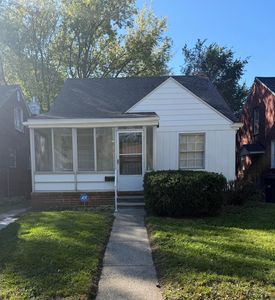


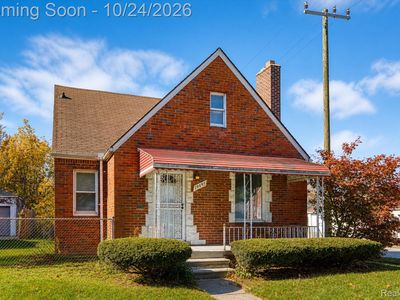
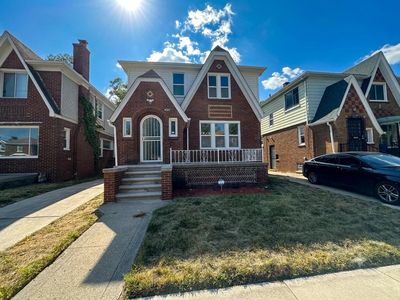
Detroit has the highest headline rental yield in the state, but the market requires careful property-level underwriting. The city’s typical home value fell 5.1% in the year to June 2026, while the median sale price fell 1.0% to $100,000 over the three months ending June, with homes taking 48 days to sell. At the same time, rents rose 2.9% to $1,345, the city’s population grew for a third consecutive year, and Wayne County’s projected gross three-bedroom yield of 10.9% remained well above the national average.
The gap between those two pictures is the housing stock. Much of Detroit’s inventory is not rentable without significant work, and the value indexes reflect that. An investor should underwrite against rent-ready comparables in specific neighborhoods, not against the citywide numbers, and should budget for condition diligence before closing. The Detroit metro was also the only Michigan region where unemployment rose over the year to June 2026, which argues for conservative vacancy assumptions.
Inner-ring suburbs offer a different profile at higher prices. Livonia had a $329,983 median sale price in July 2026 with 0.82 months of supply, while Ferndale had a $256,650 median with 1.3 months of supply.
Oakland County
Investment Properties Listed Today on Sale in Oakland County
Oakland County offers a different balance of price, rental income, and tenant purchasing power. The median sale price was $397,000 for the three months ending July 2026, up 3.8%, at about $212 per square foot. Current market data puts projected gross rental yield at 7.8% for 2026. Rochester Hills, Troy, and Novi have median household incomes between $109,000 and $128,000, giving the area a stronger income base than many lower-priced Michigan markets. Properties can move quickly when it is time to sell, while competition can make acquisition more difficult.
Grand Rapids
Investment Properties Listed Today on Sale in Grand Rapids
Grand Rapids stands out for its combination of population growth, rental demand, and employment diversity. The typical home value reached $307,094 in August 2026, up 3.2%, while homes were selling in about six days with roughly six offers. Rents reached $1,613 in May 2026, up 2.6% year over year and 74% over ten years.
The metro has led Michigan in population growth since 2020, while healthcare and education represent significant parts of its employment base. Household income in the city grew by more than 80% between 2014 and 2024.
The cost of that stability is a 6.3% indicative gross yield and the most competitive purchase process in the state. An investor buying remotely needs financing and documents ready before making an offer.
Lansing
Investment Properties Listed Today on Sale in Lansing
Lansing offers the best balance of yield and stability in this comparison. The home price was $169,388 in August 2026, up 2.1%, and homes are going pending in about nine days. Rent of $1,219 was up 3.1% year over year, the fastest rent growth of the five cities, producing an indicative gross yield of 8.6%. The state government and Michigan State University anchor employment, and Ingham County was among the faster-growing large counties in Michigan in 2025.
The trade-off is a lower price ceiling and thinner liquidity than Grand Rapids. Lansing is a hold-for-income market.
Kalamazoo
Investment Properties Listed Today on Sale in Kalamazoo
Kalamazoo sits between Lansing and Grand Rapids on most measures. The typical home value was $245,332 in July 2026, up 4.0%, the strongest annual appreciation among the five cities compared here. Rent was $1,269, up 2.0%, producing an indicative gross yield of 6.2%. Household income in the city grew more than 80% between 2014 and 2024. Western Michigan University, healthcare providers, and life-sciences employers contribute to the local tenant base.
Ann Arbor
Investment Properties Listed Today on Sale in Ann Arbor
Ann Arbor has the highest home values among the markets compared here. The typical home value reached $489,157 in June 2026, up 3.6%, and homes were going pending in about seven days. The University of Michigan and its health system provide major employment anchors for the area. Rent was $2,204, up 1.4%, producing an indicative gross yield of 5.4%.
A separate rental listing measure put average asking rent at $2,050 in September 2026, down $150 from a year earlier. The two rent measures use different methodologies, so they should not be compared directly, but the softer listing figure is worth noting.
High-Yield Secondary Markets: Flint and Saginaw
Flint and Saginaw have appeared in market data with gross rental yields above 10%. They also have some of the lowest median household incomes among Michigan cities. High headline yields in these markets come with thin liquidity, a weaker income base, and potentially heavier management demands. For an investor managing a property from abroad, those factors make property-level due diligence especially important.
Financing a Michigan Rental Property as a Foreign National
A Debt Service Coverage Ratio (DSCR) loan qualifies the borrower on the property’s rental income, with no requirement for US personal income or an established US credit history. The ratio is gross rental income divided by PITIA: principal, interest, taxes, insurance, and any association dues. A ratio of 1.0 means the rent exactly covers the payment; above 1.0, the property produces surplus cash flow.
For a foreign national investing in Michigan, the DSCR structure can align well with the market’s economics. Michigan’s combination of relatively low purchase prices and rents in the $1,200 to $1,600 range can produce workable ratios in markets such as Lansing, Kalamazoo, and Grand Rapids. In Detroit and other lower-priced submarkets, the appraisal, property condition, and available loan structure can have a significant effect on financing.
HomeAbroad offers DSCR financing for foreign nationals investing in Michigan rental property, with no US credit history required. The program can also accommodate eligible properties with a DSCR below 1.0, with a DSCR as low as 0.75 in qualifying scenarios. This means a property may still be considered for financing when rental income covers 75% of the mortgage-related debt service. Final qualification depends on the borrower, property, documentation, and applicable program requirements.
More detail on program mechanics is available through HomeAbroad’s DSCR financing page. A DSCR calculator can also help investors estimate a property’s coverage ratio before making an offer
Ready to Run the Numbers on a Michigan Property?
HomeAbroad can help foreign national investors evaluate DSCR financing for a Michigan rental before making an offer, which can be useful in competitive markets such as Grand Rapids and Oakland County. Investors can request a rate quote or begin the pre-approval process, then connect with an international-buyer real estate agent through HomeAbroad for the property search.
Frequently Asked Questions
Is Michigan a Good State for Rental Property Investment?
For income, yes. Michigan’s largest counties post gross rental yields above the national average, home values are about 27% below the US typical value, and price-to-income is 3.7 against 4.5 nationally. For appreciation, expectations should be moderate: the state’s population grew 0.3% in 2025, and its labor market is softer than the US as a whole.
Which Michigan City Has the Highest Rental Yield?
Wayne County, which contains Detroit, had a projected gross three-bedroom yield of 10.9% in the latest comparable county-level data, among the highest figures for Michigan’s large counties. Citywide indicators for Detroit run higher still, but they are heavily affected by very low-value housing stock. Rent-ready homes in stable Detroit neighborhoods generally cost more than the citywide median and produce a lower yield than the headline figure.
Which Michigan City Is Best for Long-Term Appreciation?
Grand Rapids and Ann Arbor have both recorded positive population and home-value trends in recent data. Grand Rapids has been the fastest-growing Michigan metro since 2020, with healthcare and education forming significant parts of its employment base. Ann Arbor benefits from major employment anchors associated with higher education and healthcare. Both markets have lower indicative yields than Detroit or Lansing.
How Much Does an Investment Property Cost in Michigan?
The typical Michigan home was worth $269,972 as of June 30, 2026, while the statewide median sale price was $293,956 in May 2026. The range is wide: Detroit’s typical home value was $77,245, with a citywide median sale price near $100,000, while Ann Arbor’s typical home value was $489,157.
What Are Average Rents in Michigan?
The statewide average asking rent was $1,400 in July 2026. By city, May 2026 rental data ranged from $1,219 in Lansing to $2,204 in Ann Arbor, with Detroit at $1,345, Kalamazoo at $1,269, and Grand Rapids at $1,613.
Can a Foreign National Get a Mortgage for a Michigan Rental Property?
Yes. HomeAbroad offers DSCR financing that qualifies primarily on the property’s rental income and does not require an established US credit history or US personal income.