
Editorial Integrity
Making informed real estate decisions starts with having the right knowledge. At HomeAbroad, we offer US mortgage products for foreign nationals & investors and have a network of 500+ expert HomeAbroad real estate agents to provide the expertise you need. Our content is written by licensed mortgage experts and seasoned real estate agents who share insights from their experience, helping thousands like you. Our strict editorial process ensures you receive reliable and accurate information.
North Las Vegas ranks first overall. It has the lowest typical home value of the six cities ($401,760), a 5.57% gross rental yield and the strongest five-year home value growth (16.2%).
Fernley has the highest gross yield (6.00%) and the fastest rent growth (26.9% over five years), though its home values rose the least (8.9%).
Sparks rents for more than Reno at a lower price. The typical Sparks home costs about $37,000 less, yet typical rent is about $143 a month higher.
Short-term rentals inside Las Vegas city limits require the owner to live on site during guest stays, which rules out most nonresident owners. Henderson and North Las Vegas allow them through registration or a permit.
Gross yield is measured before costs. Property taxes, insurance, homeowners association (HOA) dues, vacancy and management fees all reduce your net return.
Table of Contents
The Nevada real estate market gives foreign investors two ways to earn rental income: long-term leases to local tenants and short-term stays for visitors. On September 2026 data, North Las Vegas and Fernley post the strongest numbers for long-term rentals, while Henderson offers the clearest legal route to short-term rentals for an owner who lives outside the US.
This guide ranks six Nevada cities on home price, rent, gross rental yield and five-year growth. It also explains which rental strategy each city supports, because in Nevada the local rules can matter as much as the numbers.
Nevada Real Estate Market Overview for 2026
Across Nevada, the typical home is valued at $440,739, and the typical monthly rent is $1,970. That puts the statewide gross rental yield at 5.3%.
The statewide yield is higher than four of the six cities ranked below, including Las Vegas, Sparks, Henderson and Reno, but lower than North Las Vegas and Fernley. This suggests Nevada offers a relatively competitive price-to-rent relationship overall, although rental income potential varies considerably by location. Investors should compare individual markets to identify properties where rental income can support financing costs and operating expenses.
A statewide figure blends very different places. Most of Nevada’s population lives in two areas: the Las Vegas metro in the south and the Reno and Sparks area in the north. Five of the six cities ranked below sit in one of those two areas, and the sixth, Fernley, is a smaller city east of Reno. Prices, rents and local rental rules vary enough between them that a buying decision should rest on city-level numbers.
How to Read These Figures
If you are new to US property data, three terms appear throughout this guide:
- Typical home value is the value of a mid-priced single-family home or condo in the area, between the lower and upper thirds of the market. It is an index figure, not the price of any one property.
- Typical monthly rent is the typical asking rent for a rental home in the area, drawn from the middle of the market.
- Gross rental yield is one year of rent as a share of the home’s value: monthly rent × 12 ÷ home value × 100.
Gross yield is useful for comparing cities, but it is not your return. In the US, a rental owner also pays property tax, homeowners insurance, HOA dues where the property belongs to an association, repairs, vacancy between tenants and, for most nonresident owners, a property management fee. A mortgage payment comes out of the remaining income. Use gross yield to build a shortlist, then model net income for each property you consider.
Long-Term vs. Short-Term Rental Opportunities in Nevada
Most foreign investors buying in Nevada are likely to be better served by long-term rentals, and the reason is regulation as much as return. Short-term rentals can earn more per night, but several Nevada cities restrict who may operate them, and the strictest rules fall on owners who do not live in the property.
Long-Term Rentals Suit Most Nonresident Owners
A long-term rental (LTR) is a home leased to one tenant, usually for six or twelve months. Income is steadier, the property needs less day-to-day attention, and a local property manager can handle tenants, rent collection and repairs while you live abroad.
Long-term rent is also what most investment property lenders use to qualify a loan. With a DSCR loan (Debt Service Coverage Ratio), the lender compares the property’s rent with its monthly payment of principal, interest, taxes, insurance and association dues. A city with a higher gross yield gives that calculation more room, all else being equal. On the numbers below, North Las Vegas, Fernley and Sparks make the strongest long-term rental cases.

Steven Glick
Director of Mortgage Sales · HomeAbroad
From an underwriting perspective, long-term rental income gives investors a more predictable basis for DSCR qualification. However, we look beyond gross rental yield. The property’s eligible monthly rent must be sufficient to cover its full housing payment, including principal, interest, taxes, insurance and applicable association dues.
Short-Term Rentals Depend on City Rules
A short-term rental (STR) is a furnished residential property rented to guests for stays of fewer than 30 days, commonly through platforms such as Airbnb or Vrbo. Nevada does not have one uniform STR licensing system. Requirements depend on the property’s city or county jurisdiction, and some locations impose restrictions that make remote ownership difficult.
Nevada Assembly Bill 363 (AB363), passed in 2021, established statutory requirements for STR regulation in Clark County and qualifying incorporated cities. These include local authorization, minimum stay requirements, distance restrictions and occupancy limits. Local governments implement these requirements through their own ordinances, which can add further conditions.
City | STR feasibility for a nonresident owner | Main conditions |
|---|---|---|
Las Vegas | Generally unsuitable | The owner must live on-site throughout each guest’s stay. A business license is required, along with zoning eligibility, a 660-foot separation from other STRs, a 2,500-foot separation from resort hotels and HOA approval where applicable. |
North Las Vegas | Possible with a permit | Requires an approved Conditional Use Permit before applying for a business license. Properties must meet 660-foot and 2,500-foot separation requirements, provide a security plan and obtain written HOA authorization where applicable. |
Henderson | Possible with registration | Annual city registration is required. Owners must designate a qualified registered local contact, meet the two-night minimum for non-owner-occupied rentals and satisfy applicable distance, occupancy and HOA restrictions. |
Reno |
| Washoe County STR permits do not apply within Reno city limits. Confirm the property’s zoning treatment and applicable city and lodging-tax requirements before purchasing. |
Sparks | Requires address-specific verification | Washoe County STR permits do not apply within Sparks city limits. Confirm whether the proposed rental use is permitted under the city’s zoning code and check applicable lodging-tax requirements. |
Fernley | Possible subject to local approval | The city adopted Ordinance 2026-018, introducing a specific STR definition and operating standards into its development code. Confirm property eligibility and approval requirements with the city before purchasing |
The Las Vegas Strip itself sits largely in unincorporated Clark County, outside the City of Las Vegas. Properties in these areas fall under a separate county licensing framework. Clark County’s existing ordinance limits licenses to 1% of eligible housing units in each unincorporated area. The county’s published licensing information also states that its application period is closed, so a new investor should not assume a license is available for a prospective purchase. clarkcountynv.gov+2
For foreign investors, the practical difference between these jurisdictions is significant. Henderson and North Las Vegas provide established registration or permitting processes that can accommodate certain nonresident ownership arrangements. Las Vegas has a strict owner-occupancy requirement, while Reno and Sparks require further zoning confirmation. Fernley has introduced new STR-specific standards that investors should review before relying on short-term rental income.
STR regulations can change, and eligibility depends on the property’s exact location, zoning, ownership structure and applicable local requirements. Confirm the current rules with the relevant city or county before purchasing a property intended for short-term rental use.
Choosing a Strategy
- Choose long-term rental if you will manage from abroad, want predictable monthly income or plan to finance with a loan that qualifies on rent.
- Consider short-term rental only in a city where a nonresident owner can hold a permit, and only if you have a local manager to handle guests, cleaning and the permit’s contact requirement.
- Model both for any property you are unsure about. A short-term plan that the city will not license has a yield of zero.
Top 6 Nevada Cities for Investment Property in 2026
These six cities are the only places in Nevada with complete data on all five measures used in this guide. They are ranked on a combined score that weights gross yield most heavily, then rent growth and home value growth equally, then entry price.
City | Typical Home Value | Typical Monthly Rent | Gross Rental Yield | 5-Year Home Value Growth | 5-Year Rent Growth | Best-Fit Strategy |
|---|---|---|---|---|---|---|
North Las Vegas | $401,760 | $1,866 | 5.5% | 16.2% | 10.5% | Long-term; short-term with permit |
Fernley | $405,738 | $2,028 | 6.0% | 8.9% | 26.9% | Long-term |
Las Vegas | $417,475 | $1,700 | 4.8% | 15.1% | 6.3% | Long-term |
Sparks | $534,404 | $2,140 | 4.8% | 10.0% | 20.0% | Long-term |
Henderson | $478,064 | $1,783 | 4.4% | 12.8% | 4.5% | Short-term or long-term |
Reno | $571,562 | $1,997 | 4.1% | 10.9% | 17.6% | Long-term; short-term where zoning allows |
1. North Las Vegas: Lowest Entry Price With a Strong Yield
Investment Properties Listed Today on Sale in North Las Vegas
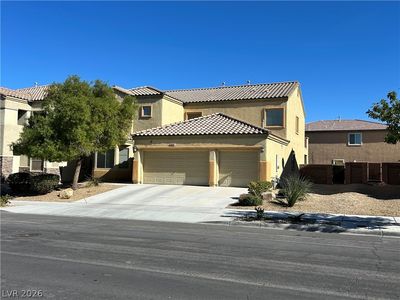


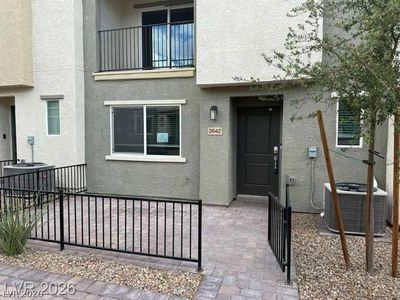
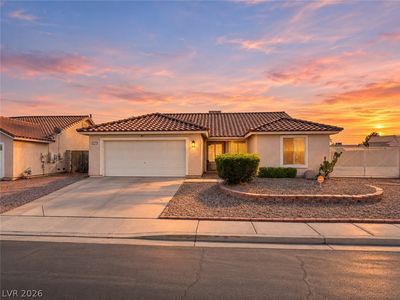
North Las Vegas ranks first because it performs well across nearly every measure in this comparison. The typical home is valued at $401,760, the lowest of the six cities, while typical monthly rent of $1,866 generates $22,392 in annual rental income and a 5.57% gross rental yield. Home values increased 16.2% over five years, the strongest appreciation among the six markets. Rents grew 10.5% during the same period.
The comparison with neighboring Las Vegas strengthens its position. A typical North Las Vegas home costs approximately $15,700 less than one in the City of Las Vegas, yet generates about $166 more in monthly rent. For an investor financing the purchase with a DSCR loan, this combination of a lower property value and higher rental income can support a stronger debt service coverage ratio, provided the property’s taxes, insurance and other qualifying expenses remain comparable.
Best fit: Long-term rental investors seeking a relatively affordable entry point in the Las Vegas metropolitan area, with a combination of rental income and historical appreciation.
Less suited to: Investors prioritizing the fastest rent growth. Fernley, Sparks and Reno recorded stronger five-year rent growth. Short-term rentals require an approved Conditional Use Permit, compliance with separation requirements and applicable HOA authorization. Investors should confirm property eligibility before relying on STR income.
2. Fernley: Highest Yield and Fastest Rent Growth
Investment Properties Listed Today on Sale in Fernley
Fernley, a smaller city east of Reno along Interstate 80, leads the six markets on rental income. Typical monthly rent of $2,028 against a typical home value of $405,738 produces a 6.00% gross rental yield, the highest in this comparison. Rents increased 26.9% over five years, also the strongest growth among the six cities.
Appreciation is the trade-off. Fernley home values increased 8.9% over five years, the lowest appreciation rate in this ranking. Investors prioritizing property value growth will find stronger historical results in North Las Vegas and Las Vegas, although past appreciation does not guarantee future gains.
Market size also deserves consideration. Fernley has a smaller housing market than Reno or Las Vegas, which can mean fewer comparable rental properties, a narrower tenant pool and a smaller group of potential buyers when it is time to sell. Before committing, ask an international-buyer real estate agent about current rental demand, vacancy rates, tenant profiles and typical leasing times in the area.
Fernley has also introduced specific short-term rental regulations through Ordinance 2026-018, which amended its development code to define STRs and establish operating standards. Investors considering this strategy should review the applicable land-use requirements for the property before purchasing.
Best fit: Income-focused investors comfortable with a smaller rental market and a longer-term holding strategy.
Less suited to: Appreciation-focused buyers and investors who prefer larger, more established rental markets.
3. Las Vegas: Solid Price Growth, Limited Short-Term Rental Access
Investment Properties Listed Today on Sale in Las Vegas
Las Vegas is among Nevada’s best-known real estate markets, and its housing figures support a long-term rental investment strategy. The typical home is valued at $417,475, while typical monthly rent of $1,700 generates $20,400 in annual rental income and a 4.89% gross rental yield. Home values increased 15.1% over five years, the second-highest appreciation rate in this ranking.
Rent growth is the weaker part of the Las Vegas investment case. Typical rents increased 6.3% over five years, the second-lowest growth rate among the six cities. Investors relying on rental income growth should compare this performance with markets such as Fernley, Sparks and Reno.
Short-term rental restrictions create another consideration for foreign investors. Under the City of Las Vegas rules, an eligible property must be owner-occupied throughout the rental period, meaning the homeowner must reside at the property during each guest’s stay. The city also requires a business license, limits the property to three bedrooms, and imposes distance and zoning requirements. This makes operating an STR difficult for an owner who lives abroad.
Investors should also distinguish properties within the City of Las Vegas from those in unincorporated Clark County. The two jurisdictions have different STR licensing frameworks, so a property’s postal address alone is not enough to establish which rules apply.
Best fit: Long-term rental investors seeking exposure to a large, established metropolitan market with strong historical home value appreciation.
Less suited to: Foreign investors planning to operate an owner-occupied Airbnb-style rental while living outside the US.
4. Sparks: Reno-Area Rents at a Lower Price
Investment Properties Listed Today on Sale in Sparks
Sparks borders Reno to the east and shares much of its regional employment and rental market. However, the two cities have different price-to-rent profiles. The typical Sparks home is valued at $534,404, approximately $37,000 less than a typical Reno home, while monthly rent of $2,140 is about $143 higher. This produces $25,680 in annual rental income and a 4.81% gross rental yield, the second-highest among the northern Nevada markets in this comparison.
Rents in Sparks increased 20.0% over five years, second only to Fernley. Home values rose 10.0% during the same period. For investors considering northern Nevada, Sparks offers a lower purchase price, higher typical rent and stronger gross yield than Reno based on the supplied market data.
Short-term rental eligibility requires additional investigation. Washoe County’s STR permit program applies only to unincorporated areas and explicitly excludes properties within the City of Sparks. A county permit therefore cannot authorize an STR inside Sparks city limits. Investors should obtain confirmation from the City of Sparks regarding the proposed property’s zoning classification, permitted rental use and any applicable licensing or tax requirements before purchasing.
Sparks suits long-term rental investors seeking northern Nevada exposure with a lower entry price than Reno. However, its typical home value is approximately $132,600 higher than North Las Vegas, making it less accessible to investors with smaller acquisition budgets.
5. Henderson: A Short-Term Rental Option for Nonresident Owners
Investment Properties Listed Today on Sale in Henderson
Henderson offers a potential short-term rental strategy for foreign investors, supported by a city registration framework that does not impose the same owner-occupancy requirement as the City of Las Vegas. Its long-term rental figures are more modest. The typical home is valued at $478,064, while monthly rent of $1,783 generates $21,396 in annual rental income and a 4.48% gross rental yield. Home values increased 12.8% over five years, while rents grew 4.5%, the slowest rate among the six cities.
For long-term rental investors, North Las Vegas offers stronger rental economics in this comparison. Its typical home costs approximately $76,300 less than a Henderson home and generates about $83 more in monthly rent.
Henderson requires short-term vacation rental owners to register each property annually and comply with the city’s operating standards. Nonresident owners can potentially use a qualified local contact, making remote ownership possible. However, the registered contact must be available 24 hours a day and respond to complaints within 30 minutes. A property manager licensed under Nevada Revised Statutes Chapter 645 can meet the relevant professional qualification requirements.
State law also establishes a two-night minimum stay for non-owner-occupied rentals, a 660-foot separation requirement between qualifying rentals, a 2,500-foot separation from resort hotels and a maximum of five authorizations per state business license. Henderson’s own registration and property eligibility requirements also apply.
The rent figures in this guide represent long-term rental data. Short-term rental income depends on nightly rates and occupancy, which vary by property, season and neighborhood. Investors should estimate those figures separately before comparing the two strategies.
Before purchasing a Henderson property for short-term rental use:
- Confirm that the specific property is eligible for registration under Henderson’s current development code.
- Review HOA governing documents, since common-interest community restrictions can prohibit short-term rentals.
- Arrange a qualified local contact who can meet the city’s response requirements.
- Account for registration fees, insurance requirements, business licensing and applicable lodging taxes.
- Confirm that the registration can be obtained for the intended ownership structure.
6. Reno: Highest Prices With Strong Rent Growth
Investment Properties Listed Today on Sale in Reno
Reno is the most expensive market in this ranking. The typical home is valued at $571,562, while typical monthly rent of $1,997 generates $23,964 in annual rental income and a 4.19% gross rental yield, the lowest among the six cities. Home values increased 10.9% over five years, while rents grew 17.6%, the third-highest rent growth rate in the comparison.
The lower gross yield means investors need to examine the relationship between rental income and monthly housing expenses carefully. A DSCR loan on a Reno investment property may require a larger down payment or a lower loan amount if the property’s eligible rental income does not provide sufficient coverage. Property taxes, insurance, HOA dues, interest rates and the actual loan amount all influence the final calculation. A pre-qualification with HomeAbroad can help investors evaluate financing options for a specific Reno property.
Short-term rental regulations also require property-level investigation. Washoe County’s short-term rental permit program applies only to unincorporated areas and explicitly excludes properties within Reno city limits. The City of Reno has its own zoning code, and the permitted use of a property must be checked with its Development Services Department. The city also requires applicable business and tax compliance, but a county STR permit cannot authorize a rental within Reno.
Reno suits investors with larger acquisition budgets who want exposure to northern Nevada’s rental market and value its historical rent growth. Buyers prioritizing higher gross rental yields and a lower entry price may find Sparks more attractive based on the figures in this comparison.
How We Evaluated Nevada’s Investment Markets
Every figure in this guide comes from two public Zillow datasets, measured for September 2026, with five-year changes calculated from September 2021.
- Home values: Zillow Home Value Index (ZHVI), mid-tier homes (33rd to 67th percentile), single-family homes and condos, smoothed and seasonally adjusted.
- Rents: Zillow Observed Rent Index (ZORI), smoothed, covering single-family homes, condos and apartments.
Which cities qualified. Twenty Nevada cities have rent data, but only six have rent data going back to September 2021, which is needed for five-year rent growth. Those six are ranked here. Cities such as Carson City, Elko and Pahrump were left out because their rent records begin after 2021.
How we calculated the measures. Gross rental yield equals typical monthly rent × 12 ÷ typical home value × 100. Five-year growth equals the September 2026 figure divided by the September 2021 figure, minus one.
How we ranked the cities. Each measure was scaled from 0 to 100 across the six cities and combined with these weights: gross yield 30%, five-year rent growth 25%, five-year home value growth 25% and entry price 20% (a lower typical home value scores higher). Rent growth was capped at 20% before scoring so that one unusually high figure could not decide the ranking; the tables show actual growth. Shifting more weight to yield swaps the first two places and leaves places three to six unchanged.
Limits. Typical values describe the middle of each market, not any specific property. The rent index includes apartments while the value index does not, so use these gross yields to compare cities; a single home needs its own rent and cost estimate. Past growth does not predict future returns.
Short-term rental rules come from official city and county pages: City of Las Vegas short-term rental overview, City of North Las Vegas short-term rentals, City of Henderson short-term vacation rentals and Clark County short-term rental FAQ.
Finance Your Nevada Investment Property With HomeAbroad
If you are considering buying a rental property in Nevada, explore HomeAbroad’s Nevada DSCR loan options and request a mortgage quote based on your investment plans. Final qualification depends on underwriting, property eligibility, and current program requirements.
HomeAbroad is a mortgage lender for international real estate investors, and it supports a Nevada purchase from the first property search through financing and closing.
- DSCR Loans Without an Established US Credit History: HomeAbroad’s Foreign National DSCR loan program allows eligible international investors to qualify based primarily on a property’s rental income rather than personal income or US tax returns.
- AI-Powered Investment Property Search: HomeAbroad’s AI-powered platform helps investors evaluate US investment properties using information such as rental income, estimated monthly cash flow, and property price.
- LLC and US bank account setup. HomeAbroad helps coordinate assistance with LLC formation, and US bank account onboarding through relevant service providers.
- Real Estate Agent Support: Finding and evaluating a property remotely can be challenging. HomeAbroad provides real estate agent support, including access to professionals experienced in working with international buyers.
Ready to test the numbers on a Nevada rental? Start a foreign national mortgage pre-qualification to see what you could borrow.
Frequently Asked Questions
Can Foreign Nationals Buy Investment Property in Nevada?
Yes, foreign nationals can buy US real estate, including Nevada rental property, subject to federal, state and local rules that apply to the buyer and the property. Check any restrictions that apply to your situation before you make an offer, and see how buying US property as a foreign national works from offer to closing.
Which Nevada City Has the Highest Rental Yield?
Among the six cities ranked here, Fernley has the highest gross rental yield at 6.00%, followed by North Las Vegas at 5.57%. Gross yield is calculated before property tax, insurance, HOA dues, vacancy and management costs, so your net return will be lower.
Is Airbnb Legal in Las Vegas?
Short-term rentals are legal in the City of Las Vegas with a business license, but the homeowner must live on site for each guest’s entire stay. In practice, that rules out an Airbnb run by an owner living abroad. Henderson and North Las Vegas have different rules that allow short-term rentals through registration or a permit.
Is North Las Vegas a Good Place to Buy a Rental Property?
On the figures in this guide, North Las Vegas ranks first in Nevada for long-term rentals. It has the lowest typical home value of the six cities, a 5.57% gross yield and the strongest five-year home value growth. Whether it suits you depends on your budget, the specific property and how you plan to manage it.
Can I Get a Mortgage for a Nevada Rental Without US Credit History?
Yes, HomeAbroad offers mortgage options that do not require an established US credit history, such as DSCR loans that qualify mainly on the property’s rental income.
Does Buying Property in Nevada Give Me a US Visa or Residency?
No. Buying US property does not grant a visa, residency, immigration status or citizenship. If you need advice on US immigration, speak with a qualified immigration attorney.